Photographical Surrealism
Project Overview
In this AP-level mixed media assignment, students will create a highly resolved artwork that explores photographic surrealism as a vehicle for self-expression. Through the integration of personal photography and surrealistic imagery, students will construct a visually compelling collage that challenges reality, distorts perception, and communicates layered meaning.
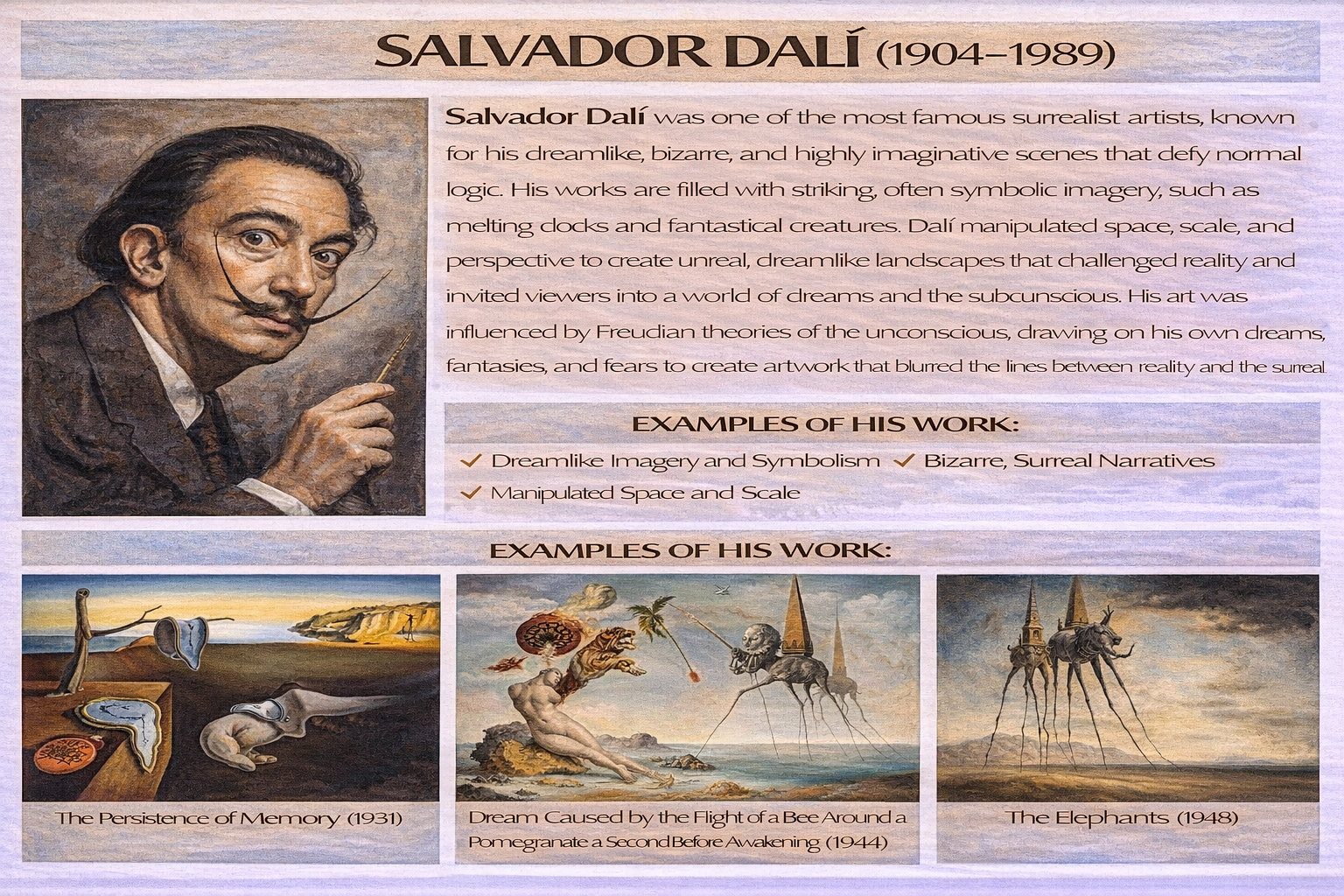
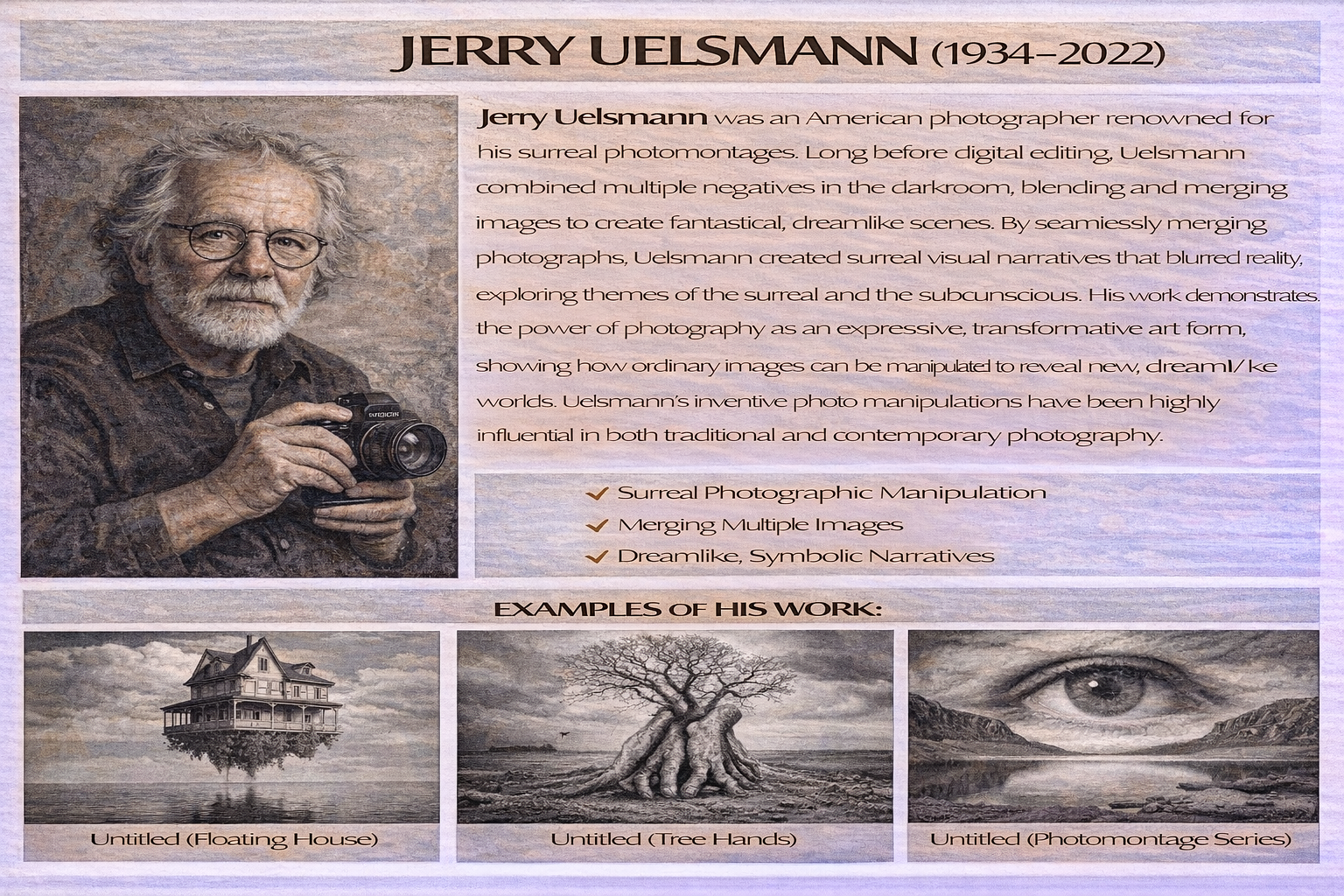
Inspired by Surrealist artists such as Salvador Dalí, René Magritte, and contemporary digital and analog photo-manipulation artists, students will investigate how unexpected juxtapositions, scale shifts, dream logic, symbolism, and altered environments can reveal psychological, emotional, or conceptual truths. Rather than documenting reality, this project asks students to transform it.
Students will incorporate original photographs (required) and combine them with drawing, painting, collage materials, or digital elements to construct a cohesive mixed media composition. Emphasis will be placed on conceptual depth, integration of materials, craftsmanship, and intentional visual decision-making consistent with AP Studio Art expectations.
AP Studio Focus
This assignment supports:
* Sustained Investigation: Exploring identity, memory, perception, subconscious thought, or symbolic narrative through surrealist strategies.
* Material Practice: Demonstrating advanced integration of photography with mixed media processes.
* Visual Evidence of Inquiry: Showing intentional compositional choices, symbolic layering, and conceptual transformation of photographic imagery.
Objective
Students will:
* Incorporate original photographic imagery into a mixed media surrealist composition.
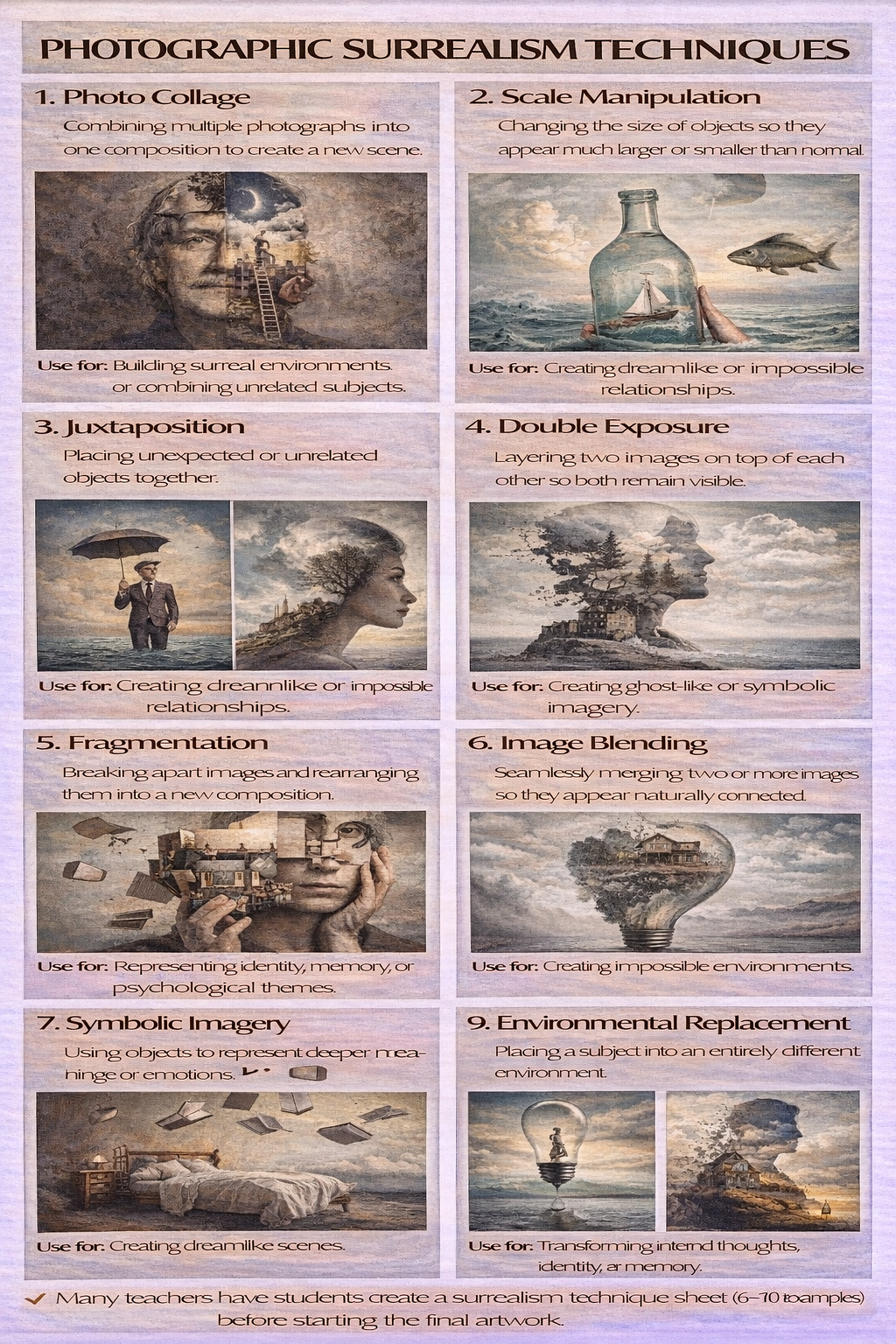
* Manipulate scale, space, and context to create dreamlike or psychologically charged imagery.
* Use symbolism and juxtaposition to communicate personal themes or ideas.
* Integrate multiple materials into a cohesive and unified artwork.
* Demonstrate advanced craftsmanship and thoughtful risk-taking appropriate for AP-level work.
* Produce a finished piece that reflects both technical skill and conceptual sophistication.
Materials
* Student-generated photographs (printed or digitally manipulated)
* Collage materials (magazines, found papers, textured materials, etc.)
* Acrylic paint, ink, oil pastel, or drawing media
* Adhesives and cutting tools
* Canvas, panel, or heavyweight mixed media surface
* Optional digital editing software for photo manipulation
Process
1. Concept Development & Symbol Exploration:
Identify a personal theme (identity, anxiety, memory, growth, duality, isolation, transformation, etc.). Research surrealist techniques and brainstorm symbolic imagery.
2. Photography & Image Collection:
Take original photographs that will serve as the foundation of your composition. Consider lighting, pose, and perspective intentionally.
3. Compositional Planning:
Create 3–4 thumbnail sketches experimenting with scale distortion, unexpected juxtapositions, and altered environments.
4. Construction & Layering:
Begin assembling the collage. Integrate photographic elements with drawing, painting, or additional textures. Focus on seamless transitions and visual unity.
5. Refinement & Resolution:
Strengthen focal points, unify color relationships, and resolve edges. Ensure that all elements feel intentional rather than decorative.
Assessment Criteria
* Strong and intentional incorporation of original photography
* Effective use of surrealist strategies (scale shifts, symbolism, juxtaposition, altered space)
* Cohesive integration of mixed media materials
* Conceptual depth and personal voice
* Advanced craftsmanship and presentation quality
* Evidence of risk-taking and sustained inquiry
Essential Question
How can transforming photographic reality through surrealist strategies reveal deeper psychological, emotional, or symbolic truths about identity and self-expression?
Learning Objectives / Student Targets
By the end of this project, students will be able to:
Conceptual Development & Inquiry
* Develop a personal theme that is strengthened through surrealist transformation.
* Use symbolism, metaphor, and visual juxtaposition to communicate layered meaning.
* Demonstrate sustained investigation through intentional planning and revision.
Photographic Integration
* Incorporate original photographic imagery as a foundational component of the composition.
* Manipulate scale, perspective, and context to alter photographic reality.
* Seamlessly integrate photographic elements with additional media.
Surrealist Strategies & Visual Transformation
* Apply surrealist techniques such as distortion, unexpected combinations, dream logic, and altered environments.
* Create visual tension through contrast, scale shifts, or spatial ambiguity.
* Transform literal imagery into conceptual or symbolic statements.
Composition & Design
* Organize visual elements to establish a strong focal point and clear hierarchy.
* Use balance, contrast, movement, and unity to create a cohesive mixed media composition.
* Guide the viewer’s eye through intentional placement of imagery and value relationships.
Technical Skill & Craftsmanship
* Demonstrate advanced handling of mixed media materials.
* Layer, blend, and refine surfaces to create cohesion between collage and hand-rendered elements.
* Present a resolved artwork with attention to detail, clean edges, and professional finish.
Creative Risk-Taking & Personal Voice
* Take creative risks in concept, composition, and media experimentation.
* Make intentional artistic decisions that reflect individuality and conceptual depth.
* Push beyond literal representation to create psychologically or emotionally charged imagery.
Reflection & Artistic Growth
* Articulate how surrealist strategies support personal meaning in the artwork.
* Participate in critique using advanced art vocabulary related to symbolism, composition, and visual hierarchy.
* Evaluate growth in both conceptual thinking and technical execution consistent with AP Studio Art expectations.
Ohio Fine Arts Standards (Visual Arts)
Creating
CE.1HSIII – Generate and conceptualize artistic ideas and work.
* Students develop an original concept rooted in personal identity, symbolism, or psychological themes using surrealist strategies.
CE.2HSIII – Organize and develop artistic ideas and work.
* Students integrate original photography with mixed media processes, applying advanced composition, scale manipulation, and visual transformation techniques.
CE.3HSIII – Refine and complete artistic work.
* Students revise and refine their artwork through critique and reflection, demonstrating craftsmanship and conceptual clarity in a cohesive mixed media composition.
Presenting / Producing
PR.4HSIII – Select, analyze, and interpret artistic work for presentation.
* Students evaluate how photographic elements, symbolic imagery, and material integration influence meaning prior to final presentation.
PR.5HSIII – Develop and refine artistic techniques and work for presentation.
* Students demonstrate advanced material control and surface resolution appropriate for AP Studio Art portfolio submission.
PR.6HSIII – Convey meaning through the presentation of artistic work.
* Students present a resolved mixed media collage in which surreal transformation and photographic manipulation clearly communicate intent.
Responding
RE.7HSIII – Perceive and analyze artistic work.
* Students analyze historical and contemporary surrealist artists and photo-manipulation practices to inform compositional and conceptual decisions.
RE.8HSIII – Interpret intent and meaning in artistic work.
* Students interpret how symbolism, distortion, and juxtaposition alter viewer perception and create psychological depth.
RE.9HSIII – Apply criteria to evaluate artistic work.
* Students apply established criteria (conceptual strength, integration of media, craftsmanship, visual hierarchy) in critique and self-assessment.
Connecting
CO.10HSIII – Synthesize and relate knowledge and personal experiences to make art.
* Students connect personal narratives, identity exploration, and emotional experiences to surrealist visual strategies.
CO.11HSIII – Relate artistic ideas and works with societal, cultural, and historical context.
* Students examine the historical roots of Surrealism and its contemporary evolution in photography, digital art, and media culture.
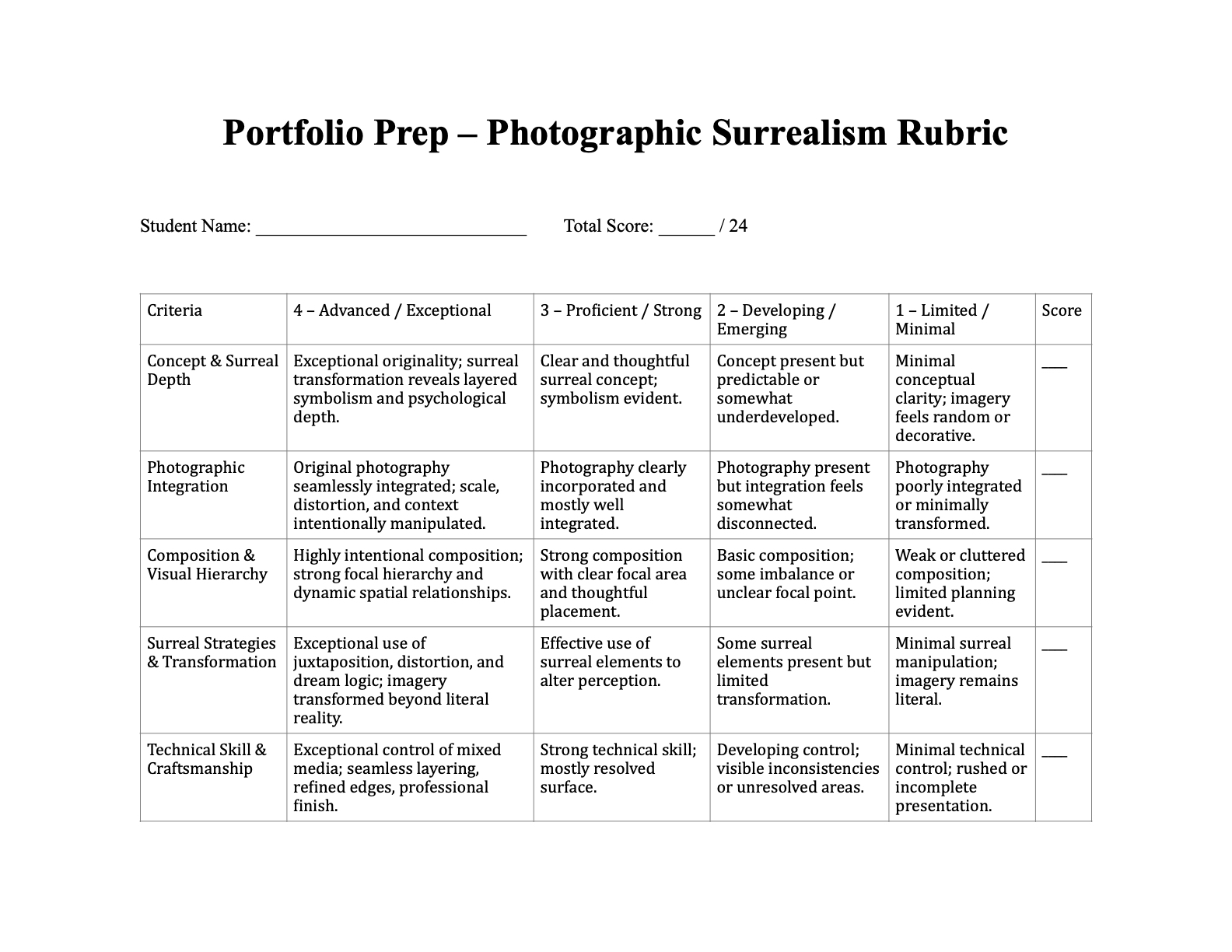
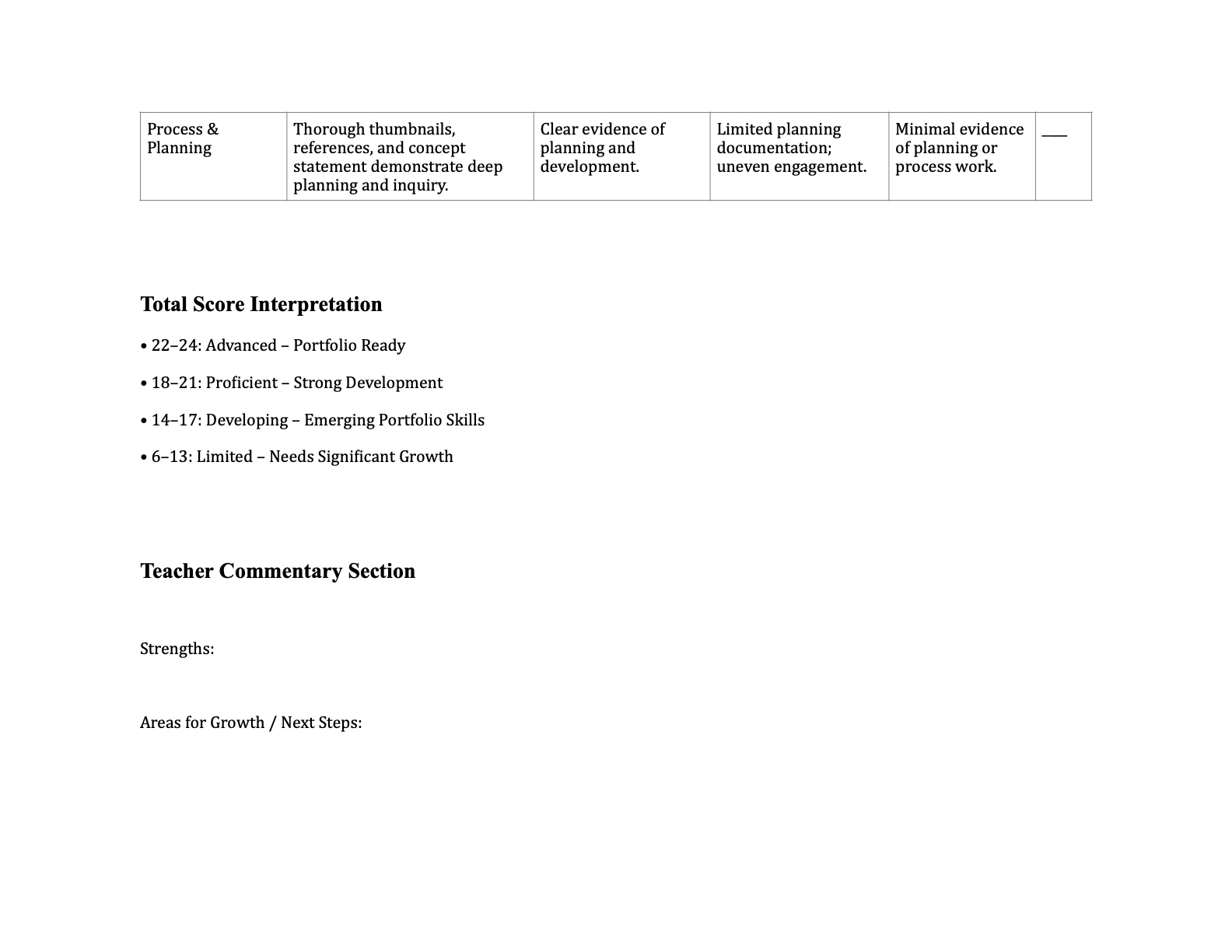
Grading Rubric
Rubrics have become popular with teachers as a means of communicating expectations for an assignment, providing focused feedback on works in progress, and grading final products. A rubric is a document that articulates the expectations for an assignment by listing the criteria, or what counts, and describing levels of quality from excellent to poor.
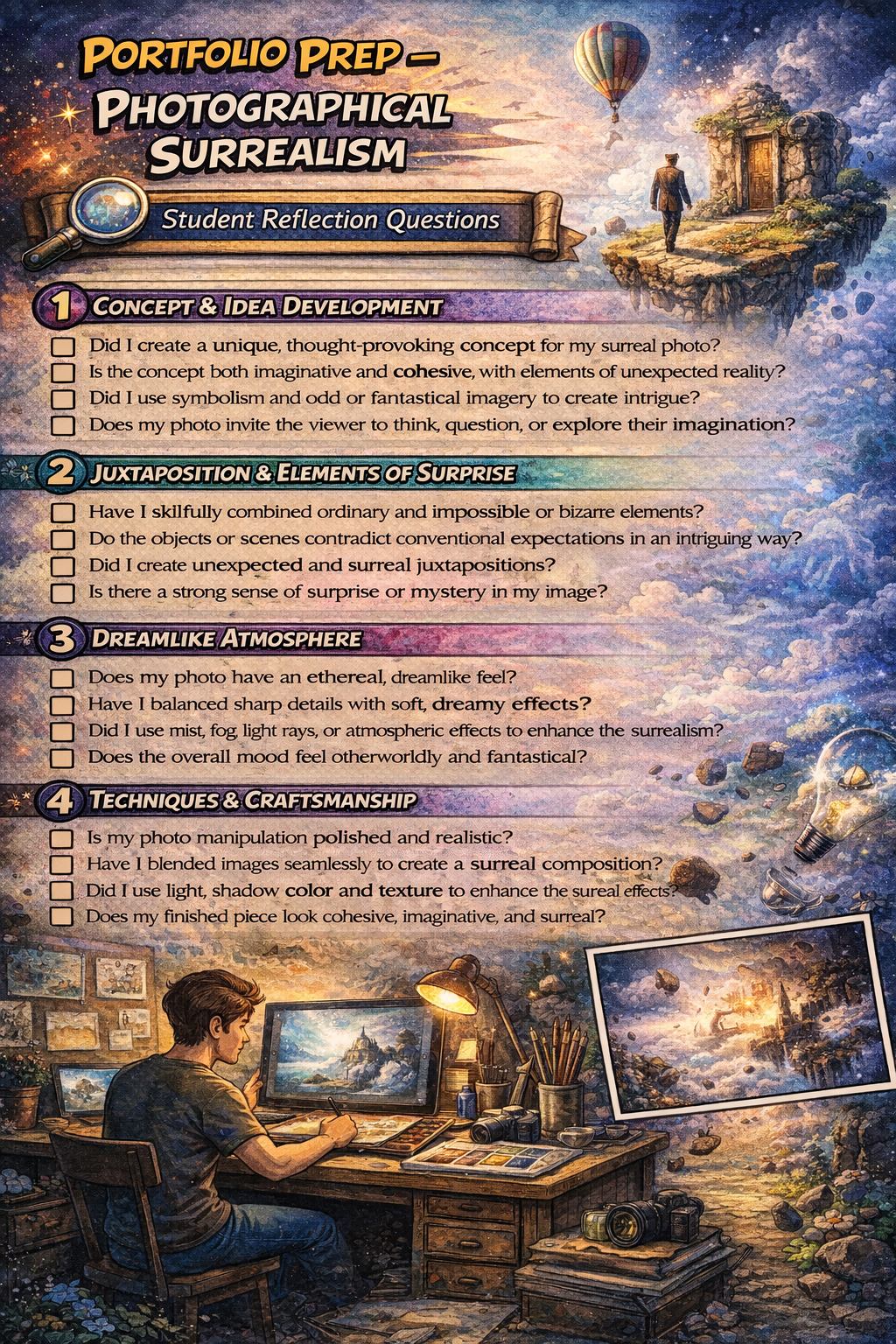
Student Reflection
A student reflection is a brief, thoughtful explanation of how and why a student created their artwork, including the choices they made, challenges they faced, and what they learned during the process. In art, reflection is important because it helps students develop critical thinking, recognize growth, strengthen their creative decision-making, and take ownership of their artistic development.
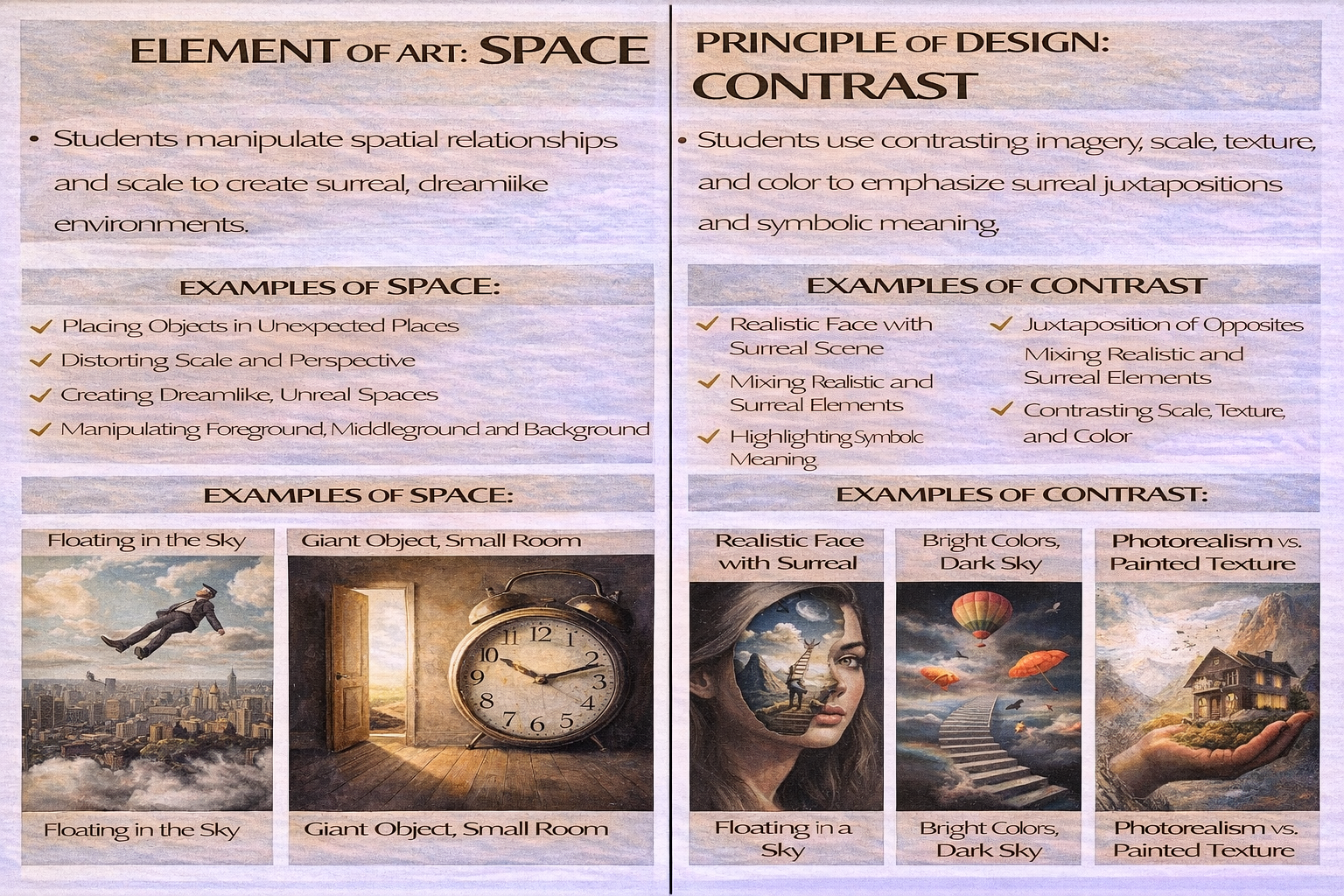
Element of Art & Principle of Design
Surealism Artists
Techniques
Presentation


Examples




“Creativity takes courage.”

Cloverleaf High School
Follow Us