Beyond the Surface
Project Overview
In this advanced acrylic painting project, students will expand beyond traditional two-dimensional painting by incorporating three-dimensional materials into their compositions. Using acrylic paint as the primary medium, students will create a relief-style artwork that combines painting with sculptural elements such as Sculptamold, modeling paste, 3D-printed objects, found materials, cardboard, wire, fabric, or other textured surfaces.
This project challenges students to thoughtfully integrate physical depth and surface variation while maintaining strong composition, craftsmanship, and conceptual intent.
Objective Students will:
* Explore the relationship between painting and sculpture.
* Develop a cohesive concept that is enhanced (not distracted) by 3D elements.
* Demonstrate advanced acrylic techniques including layering, glazing, impasto, and textural application.
* Solve structural and design challenges when combining diverse materials.
Inspiration
Artists who blur the line between painting and sculpture include:
* Anselm Kiefer – Known for incorporating raw materials like straw, lead, and thick impasto surfaces.
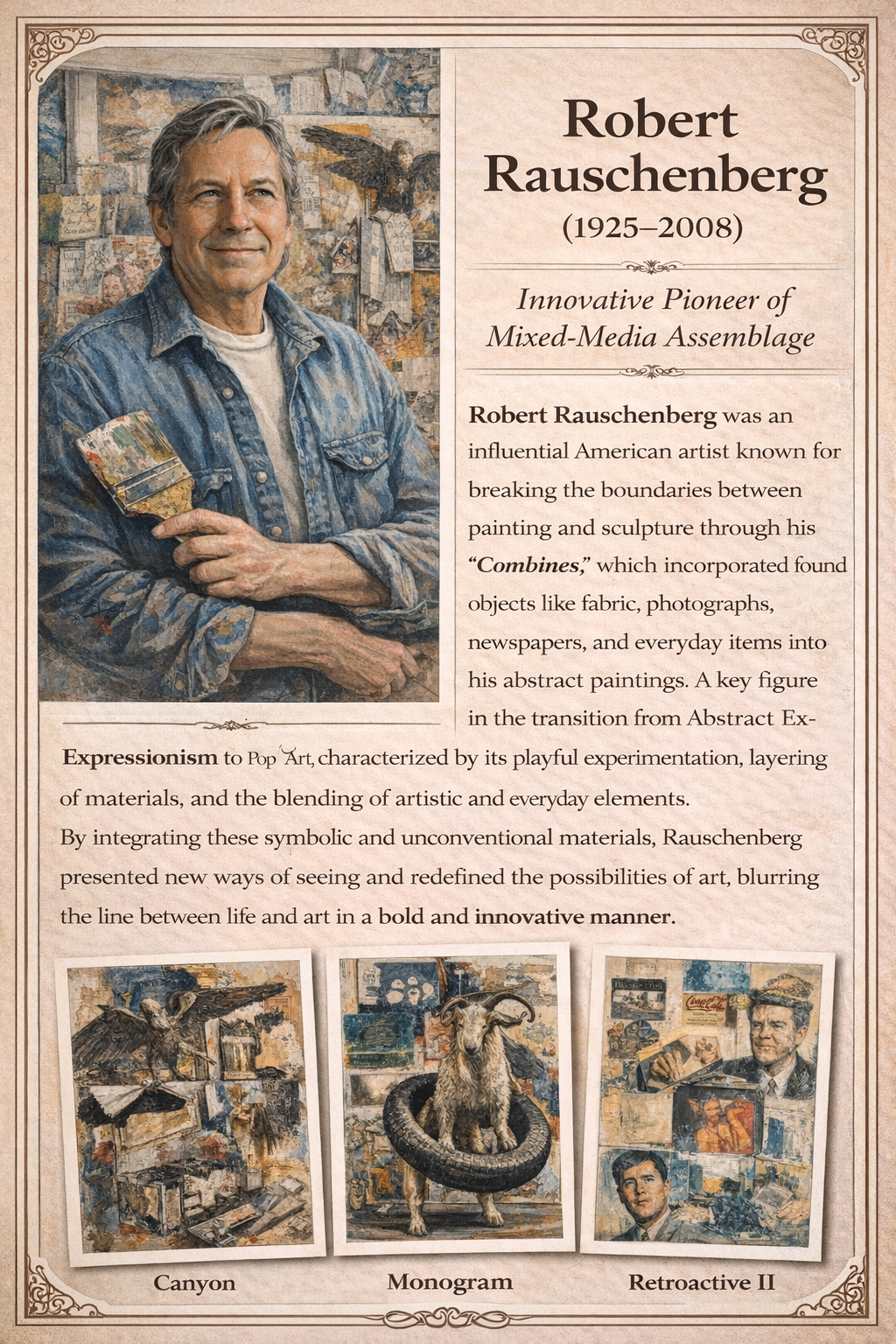
* Robert Rauschenberg – Combined painting and found objects in his “Combines.”
* El Anatsui – Uses found materials to create textured, dimensional wall-based works.
* Louise Nevelson – Created monochromatic sculptural wall installations from found wood objects.
Students should research at least one artist whose work combines painting and dimensional materials.
Requirements
* Minimum size: 16” x 20”
* Acrylic paint must be the dominant medium.
* At least three different 3D materials must be incorporated.
* 3D elements must be securely attached and structurally sound.
* Surface treatment (painting) must unify the composition.
* Evidence of planning: thumbnail sketches and a written concept statement (1 paragraph).
Theme Options
Students may choose one of the following themes (or propose their own):
* Identity and Layers
* Nature vs. Industry
* Memory and Time
* Transformation
* Abstract Exploration of Texture and Depth
Process
1. Concept Development: Brainstorm and sketch ideas.
2. Material Experimentation: Test Sculptamold, modeling paste, and adhesives before applying to final surface.
3. Construction Phase: Build dimensional elements first.
4. Painting Phase: Integrate color, value, and surface treatment to unify the piece.
5. Refinement: Evaluate composition, balance, craftsmanship, and conceptual clarity.
Assessment Criteria
* Concept & Creativity (25%) – Depth of idea and originality.
* Composition & Design (25%) – Effective use of space, balance, movement, and focal point.
* Technical Skill (25%) – Acrylic technique and craftsmanship with materials.
* Integration of 3D Materials (15%) – Materials enhance meaning and design.
* Effort & Process (10%) – Planning, studio participation, and critique engagement.
Essential Question
How can physical depth transform the emotional or conceptual impact of a painted image?
Learning Objectives / Student Targets
By the end of this project, students will be able to:
1. Observation & Representation
* Accurately observe and document real objects through drawing.
* Demonstrate proportional relationships and spatial awareness in a still life composition.
2. Material & Technical Skill
* Apply value and shading with graphite to create depth and form.
* Use ink to reinforce contour, emphasize contrast, and define edges.
* Incorporate oil pastel to build bold color, expressive texture, and layered richness.
* Use colored pencil to refine details, enhance form, and smooth transitions in color and tone.
3. Integration of Media
* Thoughtfully combine pencil, ink, oil pastel, and colored pencil into a unified visual whole.
* Make intentional decisions about where each medium contributes best to overall structure, mood, and emphasis.
4. Composition & Design
* Organize visual elements to demonstrate balance, proportion, and dynamic rhythm.
* Guide the viewer’s eye through strategic use of contrast, mark-making, and color placement.
5. Creative & Critical Thinking
* Experiment with media behaviors and problem-solve accordingly.
* Communicate personal artistic decisions through expressive mark-making and color choices.
6. Reflection & Artistic Growth
* Articulate strengths, challenges, and artistic intent in reflection or critique.
* Demonstrate increased confidence and competence with multi‑media processes.
Ohio Fine Arts Standards (Visual Arts)
VA:Cr2 – Create
* VA:Cr2.1.HSI Use multiple approaches to begin creative endeavors (e.g., observational drawing, thumbnail sketches, or exploratory studies).
* VA:Cr2.2.HSI Demonstrate quality craftsmanship through careful selection, handling, and care of art materials and tools.
VA:Cr3 – Refine & Complete
* VA:Cr3.1.HSI Evaluate and refine works of art or design through persistence, practice, and reflection.
* VA:Cr3.2.HSI Individually or collaboratively apply tools, media, and techniques with precision to enhance artistic intent.
VA:Re7 – Perceive & Analyze
* VA:Re7.1.HSI Hypothesize how art reflects observation, investigation, or cultural meaning (connecting observation of objects with artistic choices).
* VA:Re7.2.HSI Use art vocabulary to express preferences with evidence and supporting reasons.
VA:Re8 – Interpret Intent & Meaning
* VA:Re8.1.HSI Interpret art by distinguishing between relevant and non‑relevant contextual information.
* VA:Re8.2.HSI Analyze methods (e.g., value, texture, color layering) artists use to convey mood or tone.
VA:Re9 – Apply Criteria
* VA:Re9.1.HSI Establish criteria to evaluate artistic choices, craftsmanship, and design quality.
VA:Cn10 – Synthesize & Relate
* VA:Cn10.1.HSI Create works that reflect personal connections to experiences, knowledge, or observation.
* VA:Cn11.1.HSI Relate artistic ideas and works within content area/other disciplines (e.g., how material behavior affects compositional decisions).
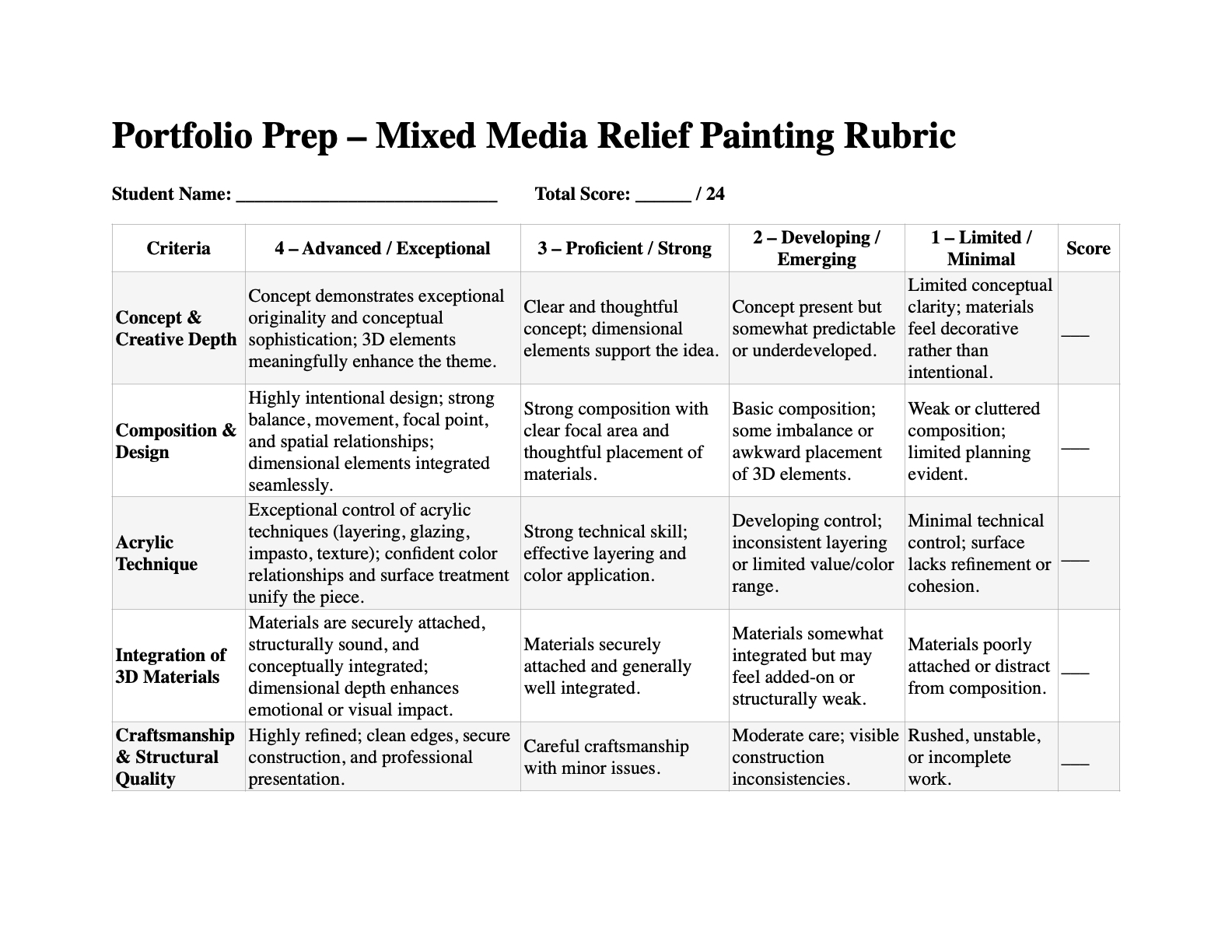
Grading Rubric
Rubrics have become popular with teachers as a means of communicating expectations for an assignment, providing focused feedback on works in progress, and grading final products. A rubric is a document that articulates the expectations for an assignment by listing the criteria, or what counts, and describing levels of quality from excellent to poor.

Student Reflection
A student reflection is a brief, thoughtful explanation of how and why a student created their artwork, including the choices they made, challenges they faced, and what they learned during the process. In art, reflection is important because it helps students develop critical thinking, recognize growth, strengthen their creative decision-making, and take ownership of their artistic development.

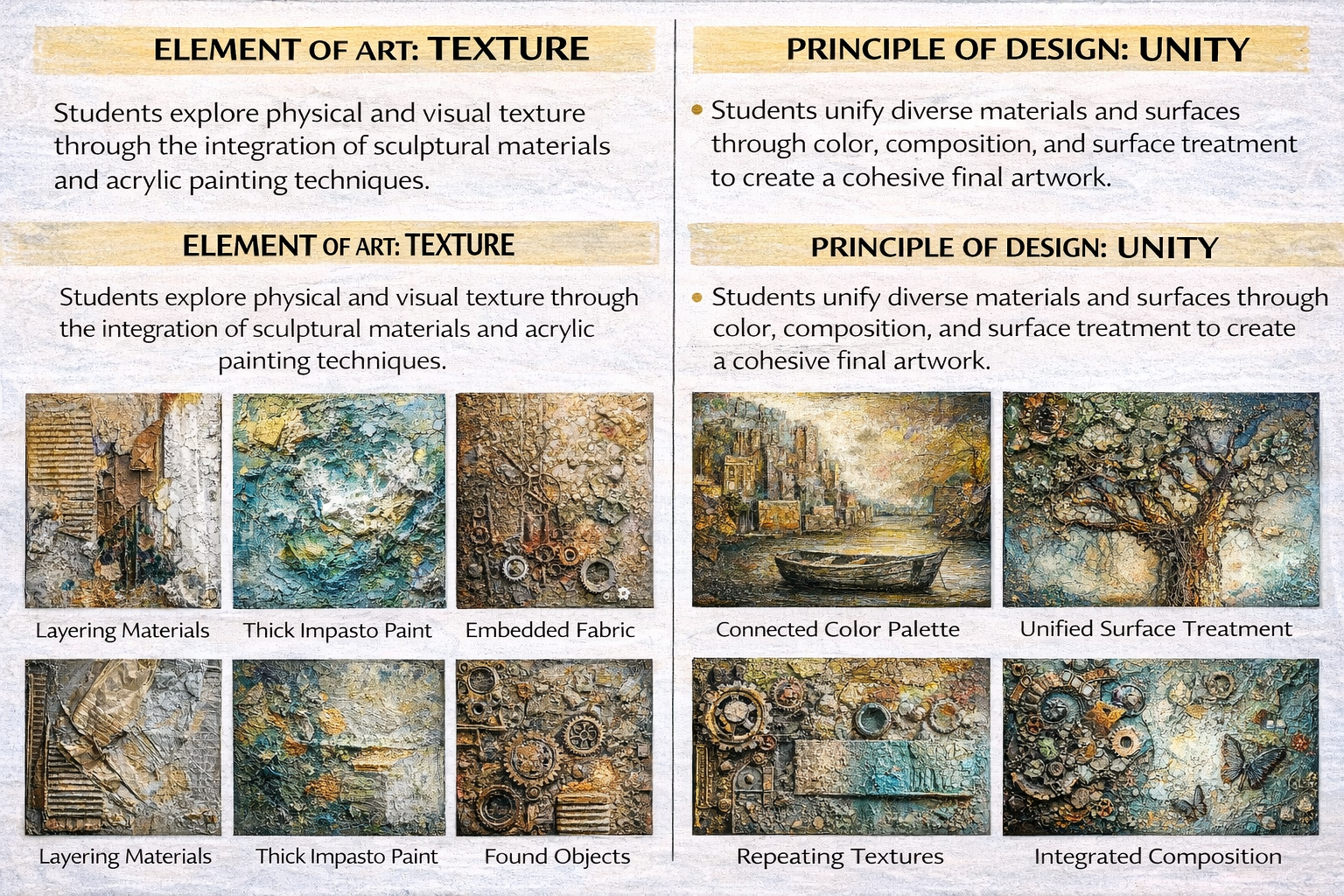
Element of Art & Principle of Design
Beyond the Surface Artists


Techniques
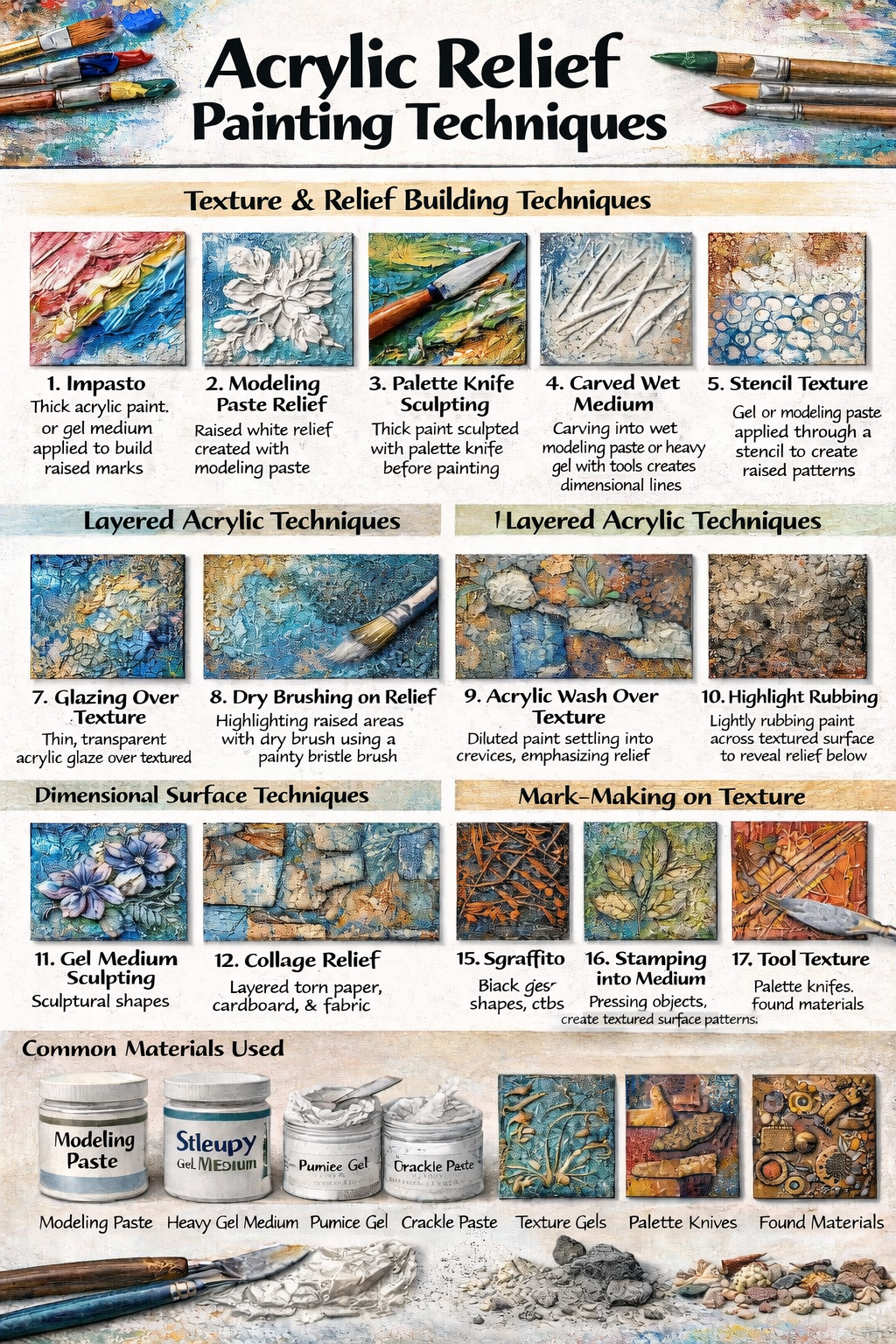
Texture & Relief Building Techniques
Impasto
Applying very thick acrylic paint so brush or knife marks remain visible and raised.
Modeling Paste Relief
Using acrylic modeling paste or heavy gel medium to build raised surfaces before painting.
Palette Knife Sculpting
Using a palette knife to sculpt paint or medium, creating ridges, peaks, and layered texture.
Carved Wet Medium
Carving or drawing into wet modeling paste or heavy gel with tools to create dimensional lines.
Stencil Texture
Applying modeling paste through a stencil to create raised patterns.
Embedded Materials
Embedding objects into wet medium, such as:
* sand
* fabric
* paper
* string
* beads
* natural materials
Layered Acrylic Techniques
Glazing Over Texture
Applying thin transparent layers of acrylic over textured surfaces to enhance depth.
Dry Brushing on Relief
Using a nearly dry brush to highlight the raised edges of textured surfaces.
Acrylic Wash Over Texture
Diluted paint settles into crevices and low areas, emphasizing relief.
Highlight Rubbing
Lightly rubbing paint across raised areas with cloth or sponge to reveal texture.
Dimensional Surface Techniques
Gel Medium Sculpting
Using heavy gel medium like clay to build sculptural shapes.
Collage Relief
Layering thick paper, cardboard, or fabric to create physical depth.
Crackle Texture
Using crackle paste or crackle medium to produce fractured surfaces.
Sand or Aggregate Texture
Mixing acrylic with:
* sand
* pumice gel
* marble dust
to produce rough surfaces.
Mark-Making on Texture
Sgraffito
Scratching through wet paint or medium to reveal layers beneath.
Stamping into Medium
Pressing objects into wet paste (leaves, stamps, tools) to create impressions.
Tool Texture
Using unconventional tools like:
* combs
* forks
* brushes
* sticks
to form surface patterns.
Sculptural Additions
Hot Glue Relief
Building raised lines or shapes with hot glue before painting.
Foam or Cardboard Build-Up
Adding dimensional forms underneath paint layers.
Mixed Media Assemblage
Attaching objects (metal, wood, plastic) to create sculptural surfaces.
Project Demonstrations


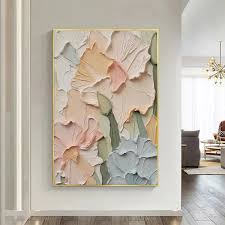
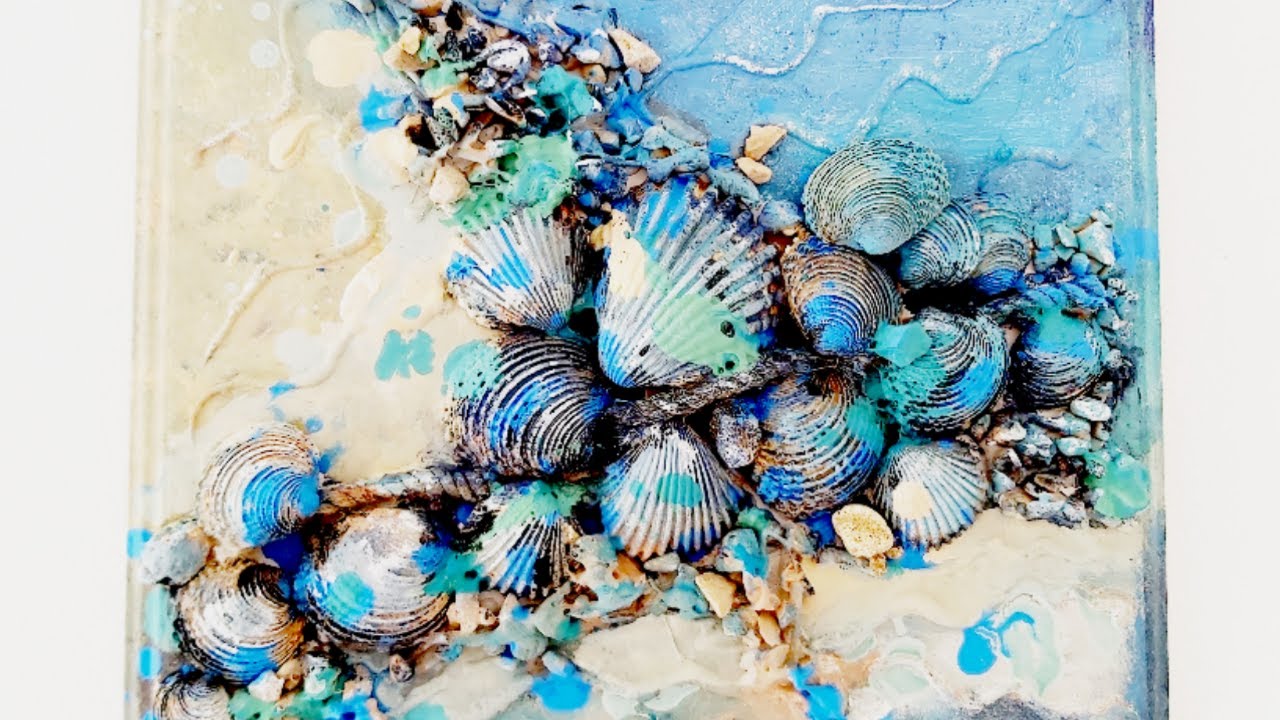
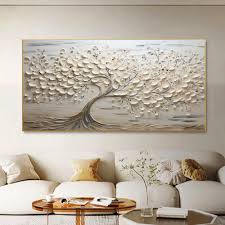
Examples




“Creativity takes courage.”

Cloverleaf High School
Follow Us