Watercolor Postcards
Project Overview
In this watercolor postcard project, students will design and paint an original image in a small-format composition inspired by real or imagined places. Working at postcard size challenges students to simplify forms, focus on strong composition, and make intentional color choices while exploring the expressive qualities of watercolor.
Students may depict a landscape, cityscape, cultural landmark, seasonal scene, or personal memory. The goal is to communicate a clear sense of place and mood within a limited space.
Objectives
Students will:
* Demonstrate understanding of watercolor techniques (wet-on-wet, wet-on-dry, layering, washes).
* Create a strong composition within a small format.
* Use color intentionally to establish mood and atmosphere.
* Show depth through value changes and spatial awareness.
* Apply craftsmanship and attention to detail in a finished presentation.
Materials
* Watercolor paper (cut to postcard size, approximately 4" x 6")
* Watercolor paints
* Assorted brushes (round and flat)
* Pencil (for light sketching)
* Water container and paper towels
* Fine liner pen (optional, for details)
* Masking tape (optional, for clean borders)
Process
1. Planning & Sketching: Brainstorm a location or theme. Create small thumbnail sketches to explore composition.
2. Light Drawing: Lightly sketch your final composition onto the watercolor paper.
3. Base Washes: Apply initial light washes to establish sky, background, and large shapes.
4. Layering: Build depth and detail through additional layers once previous layers are dry.
5. Details & Refinement: Add final details and strengthen contrast where needed.
6. Presentation: Complete the back of the postcard format (address lines and message area) if required.
Assessment Criteria
* Strong composition within limited space
* Effective use of watercolor techniques
* Color harmony and value contrast
* Clear sense of place or mood
* Craftsmanship and presentation quality
Creative Challenge
Because of the small scale, focus on simplifying shapes and emphasizing the most important visual elements. Think about how travel postcards capture atmosphere quickly—what details will help your viewer feel transported to your scene?
This project highlights how thoughtful design and expressive watercolor techniques can transform a small surface into a powerful visual story.
Learning Objectives / Student Targets
By the end of this project, students will be able to:
1. Watercolor Techniques
* Demonstrate proficiency in wet-on-wet, wet-on-dry, layering, and wash techniques.
* Control pigment, water, and brush to create intentional effects.
Student Targets (I Can Statements)
* I can use wet-on-wet and wet-on-dry techniques effectively.
* I can layer washes to build depth and color intensity.
* I can control water and paint to avoid unintended bleeding or muddiness.
2. Composition & Small-Format Design
* Create a strong, simplified composition suitable for a small postcard format (approximately 4" x 6").
* Focus on the most important visual elements to communicate the scene clearly.
Student Targets (I Can Statements)
* I can plan my composition using thumbnail sketches.
* I can simplify shapes and elements for clarity.
* I can emphasize a clear focal point in a small format.
3. Color & Mood
* Use color intentionally to convey mood, atmosphere, and a sense of place.
* Explore harmonious color combinations and effective contrast in value.
Student Targets (I Can Statements)
* I can choose colors to convey mood or atmosphere.
* I can create depth using value changes and spatial awareness.
* I can balance warm and cool colors to enhance visual interest.
4. Depth & Spatial Awareness
* Show a sense of depth and dimension in a small-scale scene.
* Apply foreground, middle ground, and background techniques for spatial clarity.
Student Targets (I Can Statements)
* I can create a sense of distance using size, placement, and value.
* I can distinguish foreground, middle ground, and background elements.
5. Craftsmanship & Presentation
* Demonstrate attention to detail and quality of execution in a small-scale finished piece.
* Optional: Properly format the back of the postcard with address and message if required.
Student Targets (I Can Statements)
* I can complete a neat, visually polished artwork.
* I can respect the boundaries of the small format.
* I can present my work professionally, including optional back formatting.
Ohio Fine Arts Standards (Visual Arts)
Students at this level demonstrate foundational artistic skills:
CR (Creating):
HSP.1CR Evaluate various sources for visual reference.
HSP.2CR Explore multiple solutions to artistic problems.
HSP.3CR Identify visual literacy strategies as a means to communicate concepts.
HSP.4CR Determine and apply what it means to create and share visual art ethically.
PE (Performing):
HSP.1PE Determine appropriate artisanship through persistence.
HSP.2PE Demonstrate increasing skill with materials and techniques.
HSP.3PE Integrate elements of art and principles of design to construct works.
HSP.4PE Select works of art for a foundational portfolio.
RE (Responding):
HSP.1RE Increase relevant vocabulary to describe and analyze visual art.
HSP.2RE Engage with self-assessment to set and monitor personal goals.
HSP.3RE Use art criticism methods when responding to works of art.
HSP.4RE Identify the relationships between community or cultural values and trends in visual art.
CO (Connecting):
HSP.1CO Understand how works of art reflect diverse communities, viewpoints, and perspectives.
HSP.2CO Recognize contributions of visual arts in everyday life.
HSP.3CO Examine personal and social contexts related to works of art.
HSP.4CO Examine various aesthetic theories and visual culture.
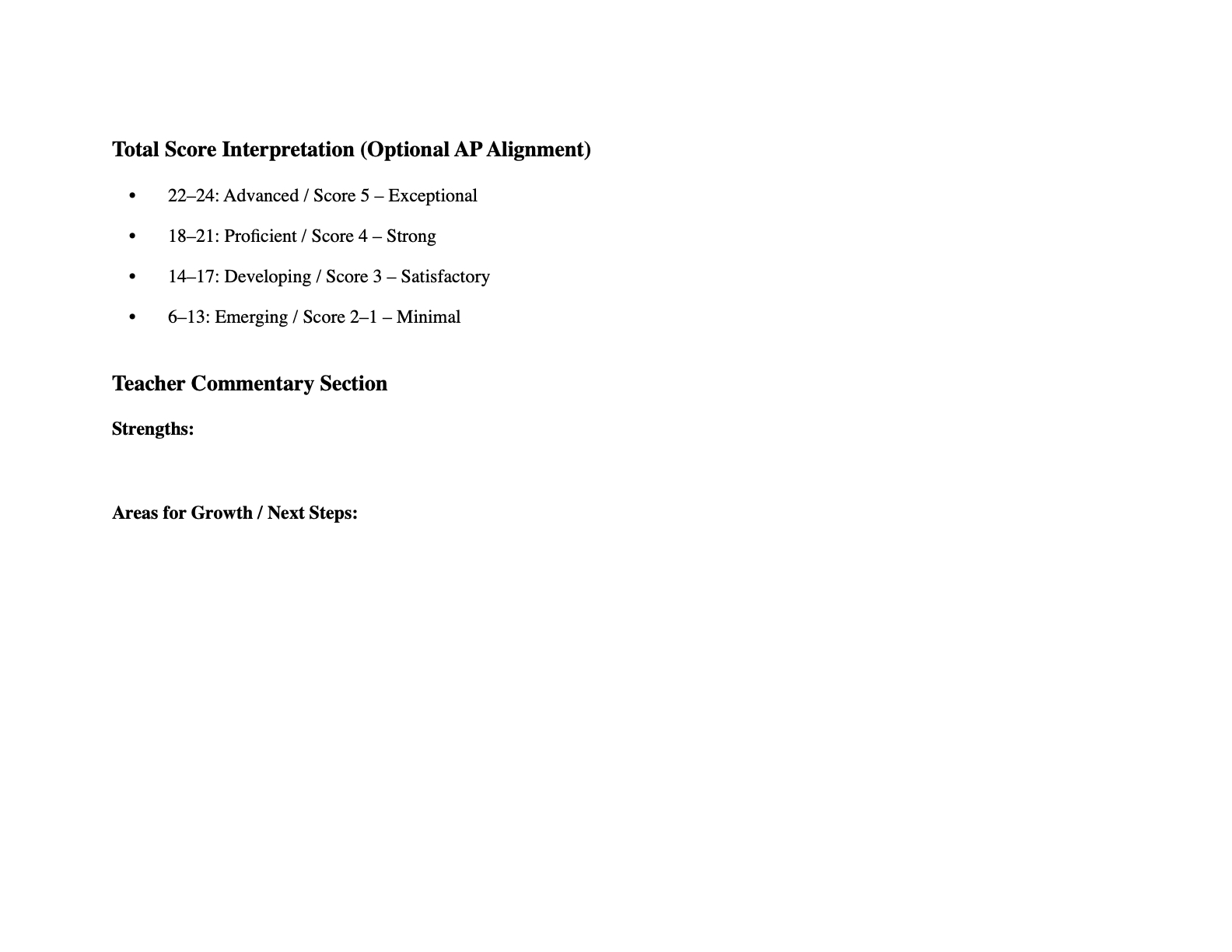
Grading Rubric
Rubrics have become popular with teachers as a means of communicating expectations for an assignment, providing focused feedback on works in progress, and grading final products. A rubric is a document that articulates the expectations for an assignment by listing the criteria, or what counts, and describing levels of quality from excellent to poor.

Student Reflection
A student reflection is a brief, thoughtful explanation of how and why a student created their artwork, including the choices they made, challenges they faced, and what they learned during the process. In art, reflection is important because it helps students develop critical thinking, recognize growth, strengthen their creative decision-making, and take ownership of their artistic development.

Element of Art & Principle of Design

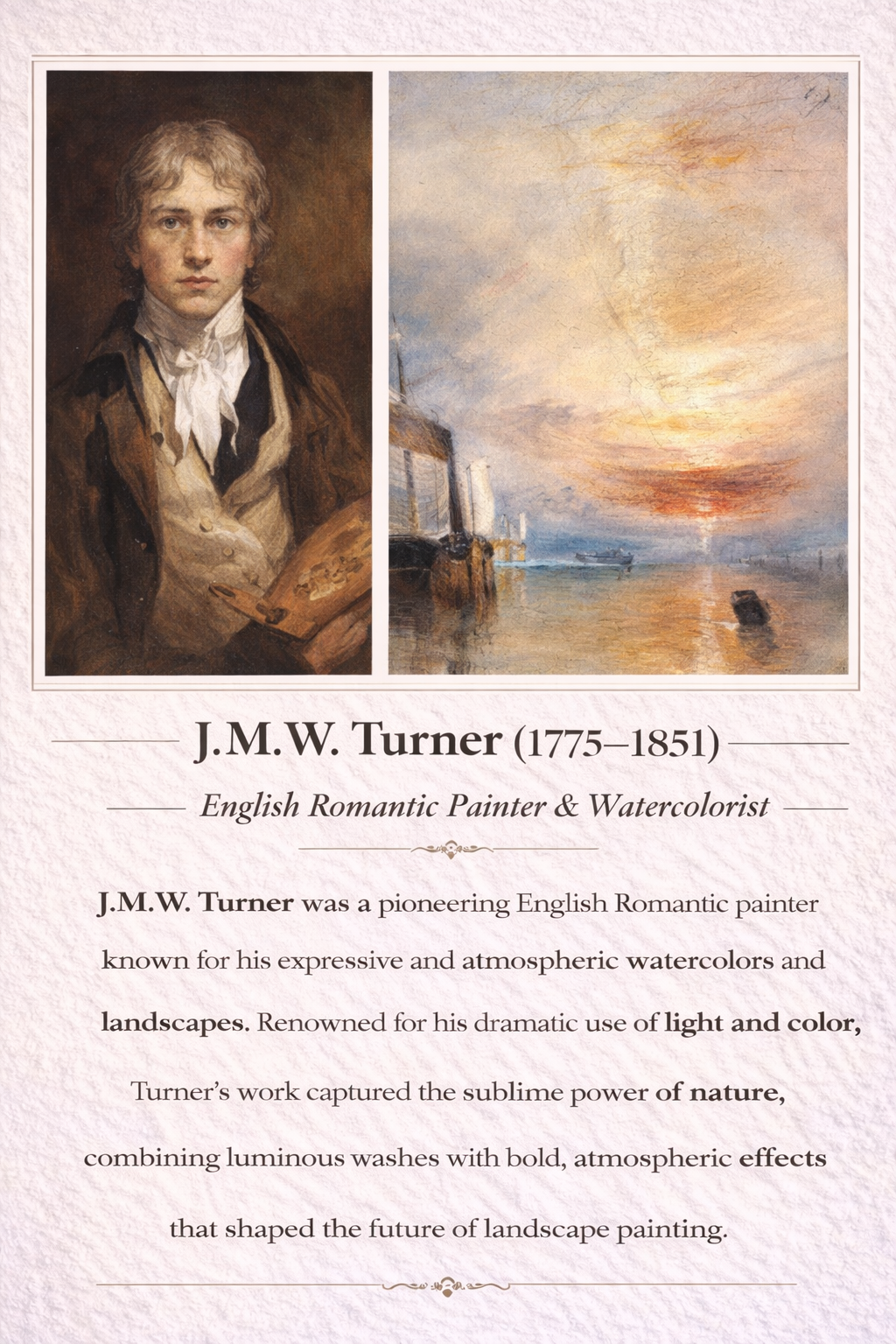
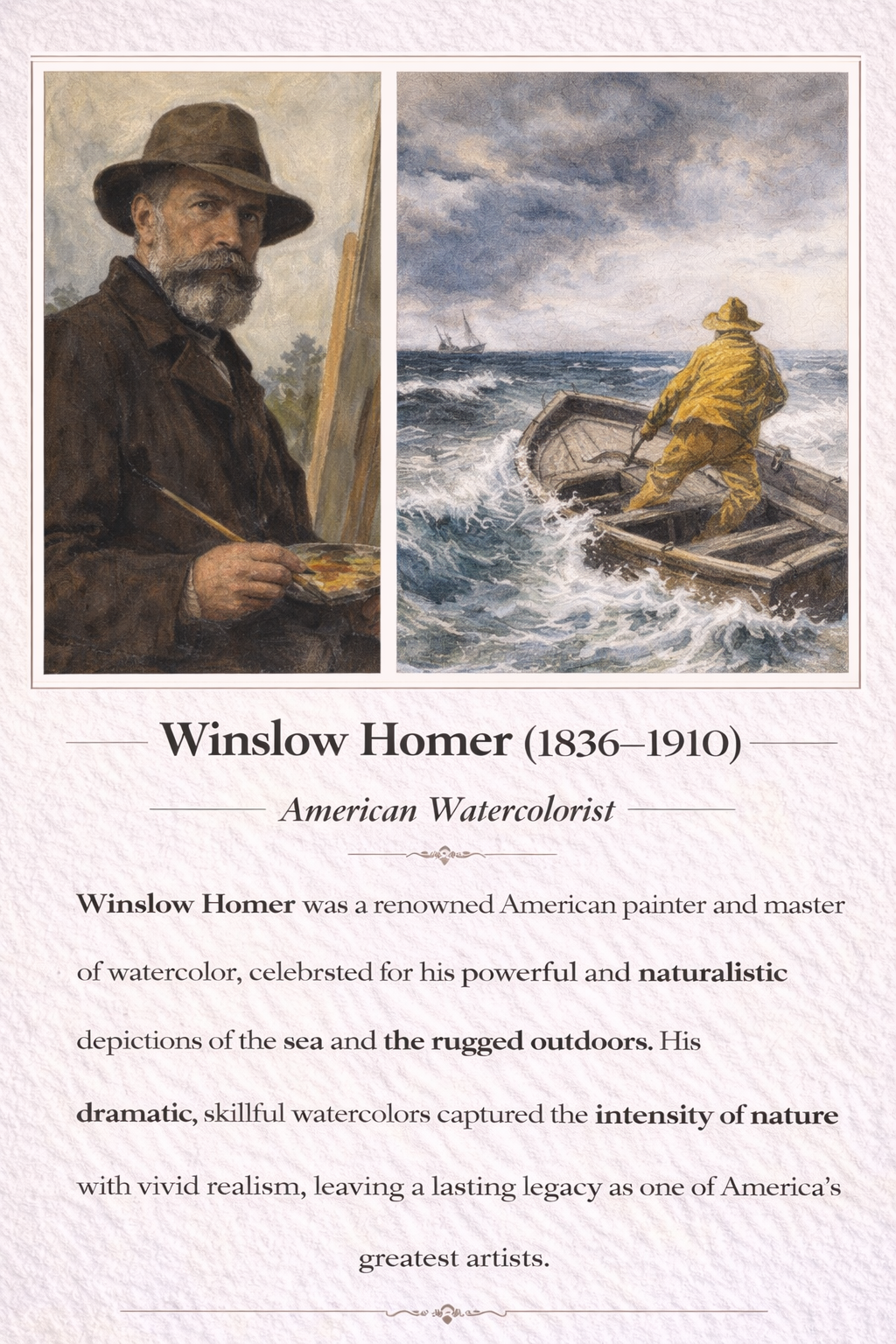
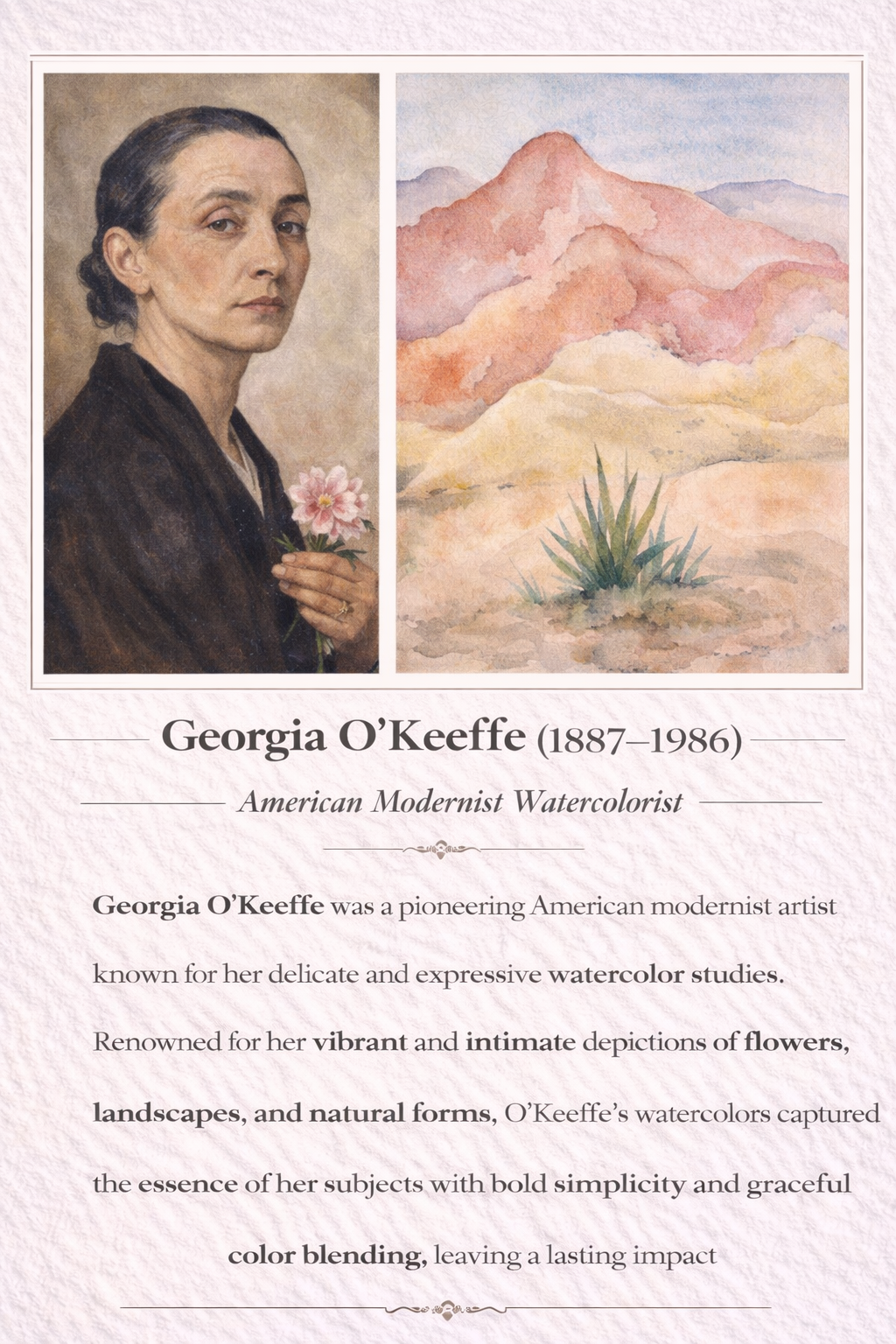
Watercolor Artists
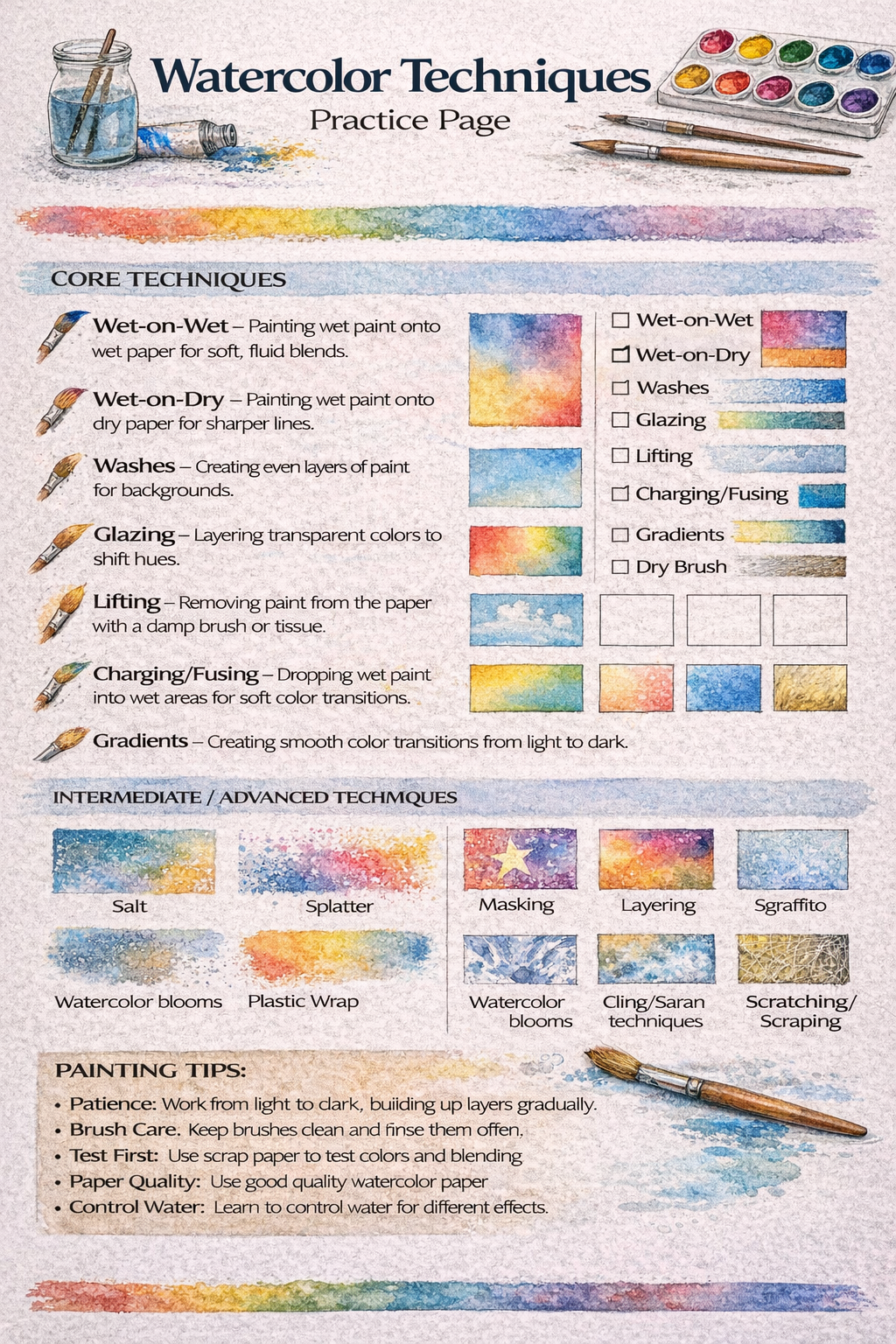
Techniques
Core Techniques
* Wet-on-Wet – Applying wet paint onto wet paper for soft blends and blooms.
* Wet-on-Dry – Applying wet paint onto dry paper for crisp edges and detail.
* Flat Wash – Even layer of diluted color over a large area.
* Graded Wash (Gradient Wash) – Smooth transition from dark to light.
* Variegated Wash – Blending two or more colors in one wash.
* Glazing – Layering transparent colors over dry layers to shift hue or deepen value.
* Lifting – Removing pigment with a damp brush, sponge, or paper towel.
* Charging Color – Dropping wet paint into a damp area to create soft color fusion.
Texture & Special Effects
* Dry Brush – Minimal water for rough, textured strokes.
* Salt Technique – Sprinkling salt on wet paint to create organic textures.
* Splatter – Flicking paint for expressive or textured effects.
* Plastic Wrap – Pressing plastic into wet paint for crystalline patterns.
* Sgraffito – Scratching into wet paint to reveal the paper beneath.
* Masking Fluid – Preserving white areas before painting.
* Water Blooms (Backruns) – Creating blooms by adding extra water to semi-dry areas.
* Sponging – Using a sponge to dab texture.
Advanced Applications
* Layering for Depth – Building multiple transparent layers for richness.
* Negative Painting – Painting around shapes to define highlights.
* Edge Control – Managing hard vs. soft edges intentionally.
* Color Temperature Shifting – Using warm and cool variations for dimension.
* Limited Palette Mixing – Creating harmony using only 2–3 colors.
Handout
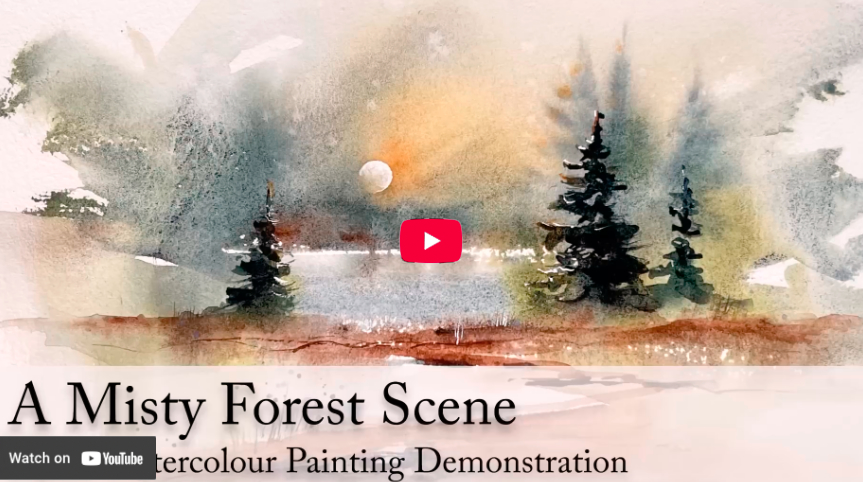
Project Demonstration


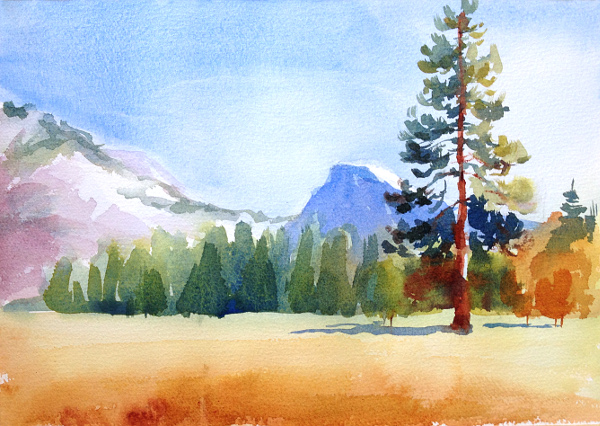
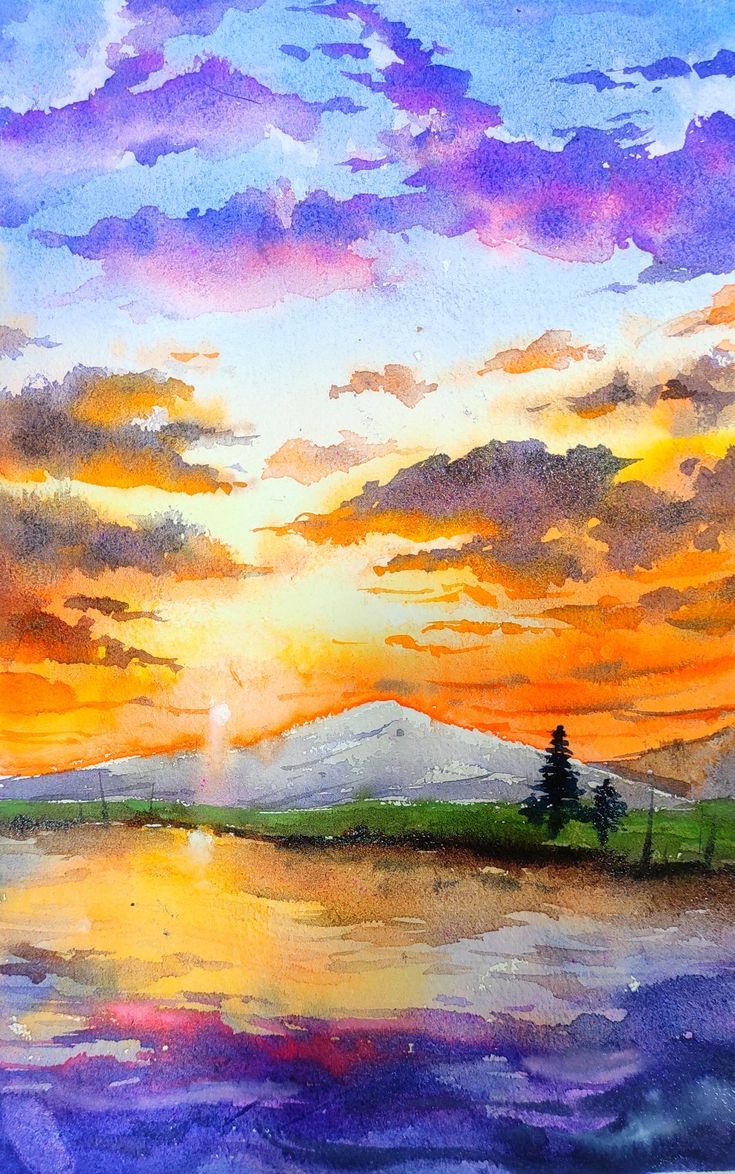
Examples



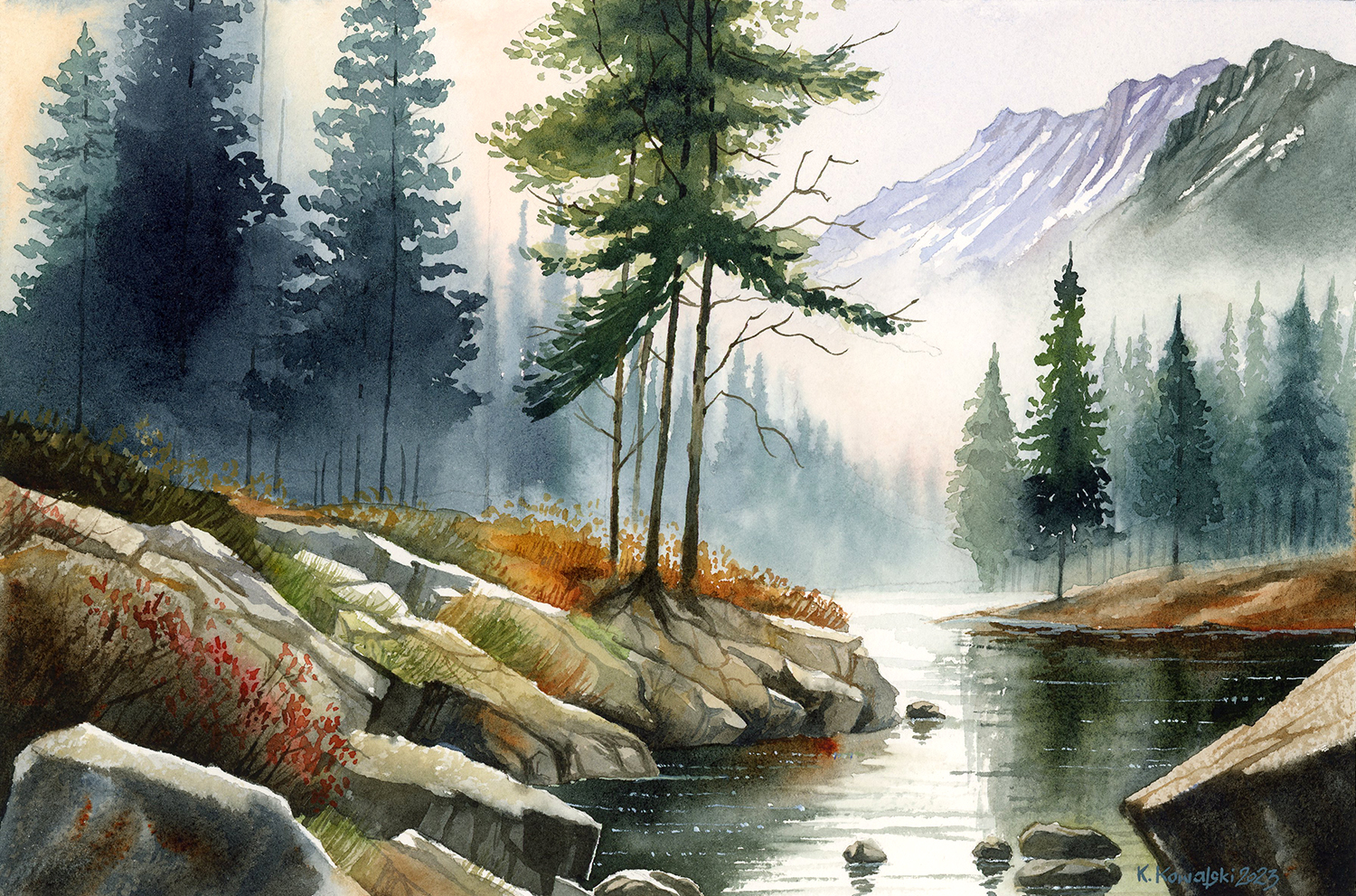


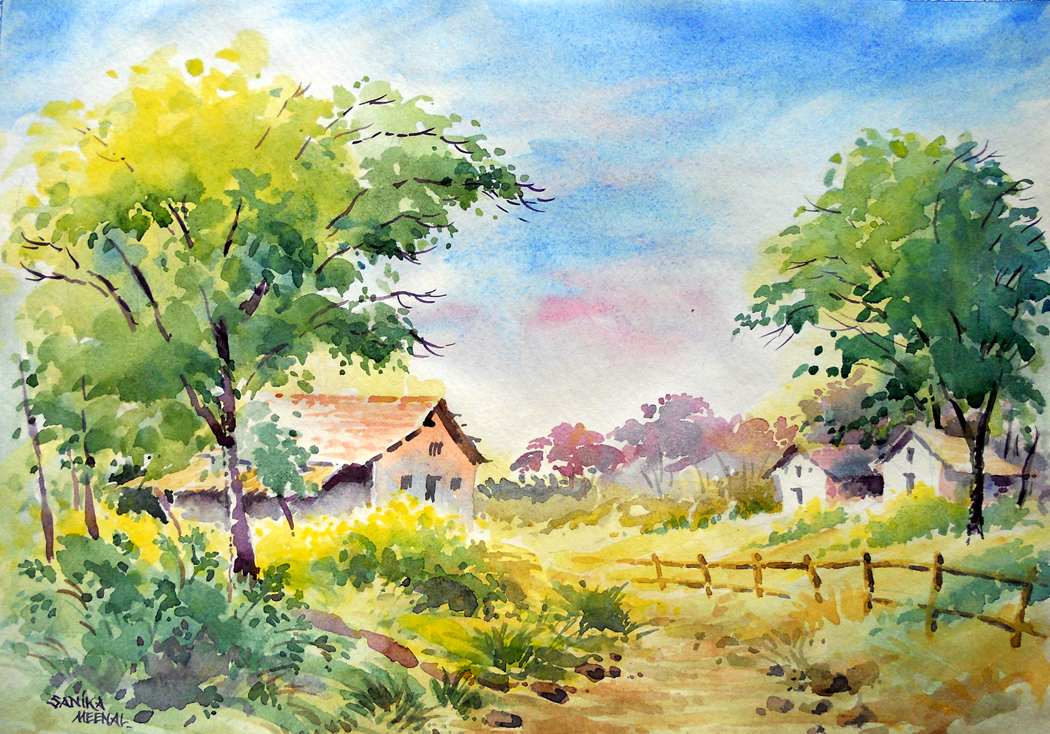

“Creativity takes courage.”

Cloverleaf High School
Follow Us