Pastel Landscape
Project Overview
In this chalk pastel landscape project, students will explore how color, layering, and blending can be used to create depth and atmosphere in a natural scene. Using chalk pastels, students will study landscapes—such as mountains, forests, deserts, beaches, or rural settings—and translate their observations into a vibrant, expressive composition.
This project emphasizes color relationships, perspective, and mark-making techniques while encouraging students to experiment with the rich, blendable qualities of chalk pastel.
Objectives
Students will:
* Demonstrate understanding of foreground, middle ground, and background.
* Apply atmospheric perspective to create depth.
* Blend and layer chalk pastels to build rich color.
* Use value contrast to define form and space.
* Experiment with mark-making techniques to suggest texture (grass, water, clouds, trees, etc.).
* Create a cohesive landscape composition with strong visual impact.
Materials
* Heavyweight drawing paper (preferably toned or pastel paper)
* Chalk pastels (variety of colors)
* Blending tools (fingers, blending stumps, paper towels)
* Reference images (teacher-provided or student-selected)
* Fixative spray (optional, teacher supervised)
Process
1. Planning & Composition: Begin with thumbnail sketches to plan composition and placement of foreground, middle ground, and background.
2. Light Sketch: Lightly outline the main shapes of the landscape.
3. Blocking in Color: Apply base layers of pastel, starting with large areas such as sky and land.
4. Blending & Layering: Blend colors to create smooth transitions and build depth.
5. Detail & Texture: Add highlights, shadows, and textural marks to enhance realism and interest.
6. Final Refinement: Strengthen contrast and refine focal areas to complete the composition.
Assessment Criteria
* Effective use of space and depth
* Skillful blending and layering of pastel
* Strong value contrast and color harmony
* Creative composition
* Craftsmanship and overall presentation
Creative Challenge
Consider how time of day and weather affect color and mood. Experiment with bold, expressive strokes versus soft blending to capture atmosphere. Think about where you want the viewer’s eye to travel and how contrast can help guide it.
This project highlights how chalk pastel can capture the beauty, movement, and mood of the natural world through vibrant color and expressive technique.
Learning Objectives / Student Targets
By the end of this project, students will be able to:
Observation & Spatial Understanding
* Identify and apply foreground, middle ground, and background in a landscape composition.
* Demonstrate understanding of atmospheric perspective (objects fade, cool, and lose contrast as they recede).
* Accurately represent space and depth within a two-dimensional format.
Student Target (I Can Statements):
* I can create depth by organizing my landscape into foreground, middle ground, and background.
* I can use atmospheric perspective to show distance.
* I can create the illusion of space on a flat surface.
Technical Skill & Media Handling
* Apply chalk pastel using layering and blending techniques.
* Demonstrate control over value (light, midtone, dark) to create form and contrast.
* Experiment with varied mark-making techniques to represent natural textures.
Student Target (I Can Statements):
* I can blend chalk pastels smoothly to create transitions in sky and land.
* I can layer colors to build richness and depth.
* I can use different marks to show texture like grass, trees, water, or clouds.
* I can use strong value contrast to define space and form.
Color Theory & Visual Impact
* Use warm and cool color relationships intentionally.
* Demonstrate understanding of color harmony and mood.
* Use contrast to create a focal point and guide the viewer’s eye.
Student Target (I Can Statements):
* I can choose colors that reflect time of day and mood.
* I can use contrast to create emphasis in my landscape.
* I can create a cohesive color scheme.
Composition & Creative Decision-Making
* Plan and refine composition through thumbnail sketches.
* Create a visually engaging and balanced layout.
* Make intentional artistic decisions about atmosphere and expression.
Student Target (I Can Statements):
* I can plan my composition before beginning.
* I can create a strong focal point.
* I can experiment with expressive pastel techniques.
Ohio Fine Arts Standards (Visual Arts)
Creating (CR)
Develop a practice of engaging with sources for idea generation.
Students brainstorm and sketch thumbnail landscape compositions to generate ideas.
Select appropriate creative processes for solutions to artistic problems.
Students demonstrate effective use of space, scale, and atmospheric perspective to create depth in landscape composition.
Performing (PE)
Refine artisanship while modeling persistence.
Students demonstrate proper pastel blending, layering, and material control.
Organize elements of art and principles of design to intentionally construct works.
Students intentionally use space, value, contrast, color temperature, and focal point to create depth and visual balance.
Responding (RE)
Expand relevant vocabulary to analyze and interpret works of art.
Students analyze how depth, value shifts, and atmospheric perspective affect realism.
Develop art criticism methods when responding to artworks.
Students explain how color relationships and compositional choices convey mood and atmosphere.
Apply self-assessment and goal-setting practices to revise artworks and document growth.
Students use rubric criteria to assess depth, blending quality, contrast, and composition and make revisions as needed.
Connecting (CO)
Connect universal themes in visual arts to personal life experiences.
Students connect landscape imagery to personal mood, environment, or lived experience.
Explore how works of art can impact issues relevant to various communities.
Students explore how landscapes reflect geographic regions, cultural identity, or environmental themes.
Grading Rubric
Rubrics have become popular with teachers as a means of communicating expectations for an assignment, providing focused feedback on works in progress, and grading final products. A rubric is a document that articulates the expectations for an assignment by listing the criteria, or what counts, and describing levels of quality from excellent to poor.


Student Reflection
A student reflection is a brief, thoughtful explanation of how and why a student created their artwork, including the choices they made, challenges they faced, and what they learned during the process. In art, reflection is important because it helps students develop critical thinking, recognize growth, strengthen their creative decision-making, and take ownership of their artistic development.

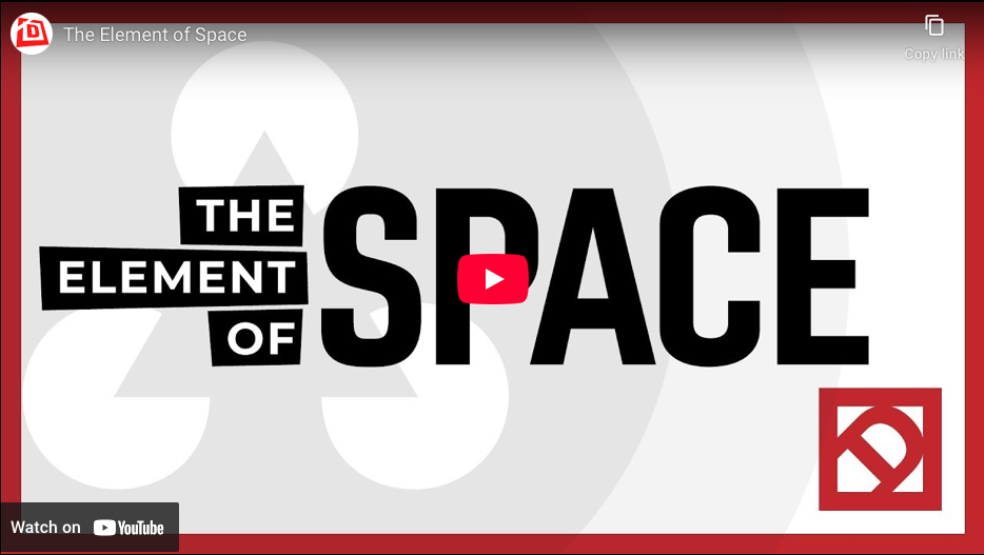
Element of Art & Principle of Design
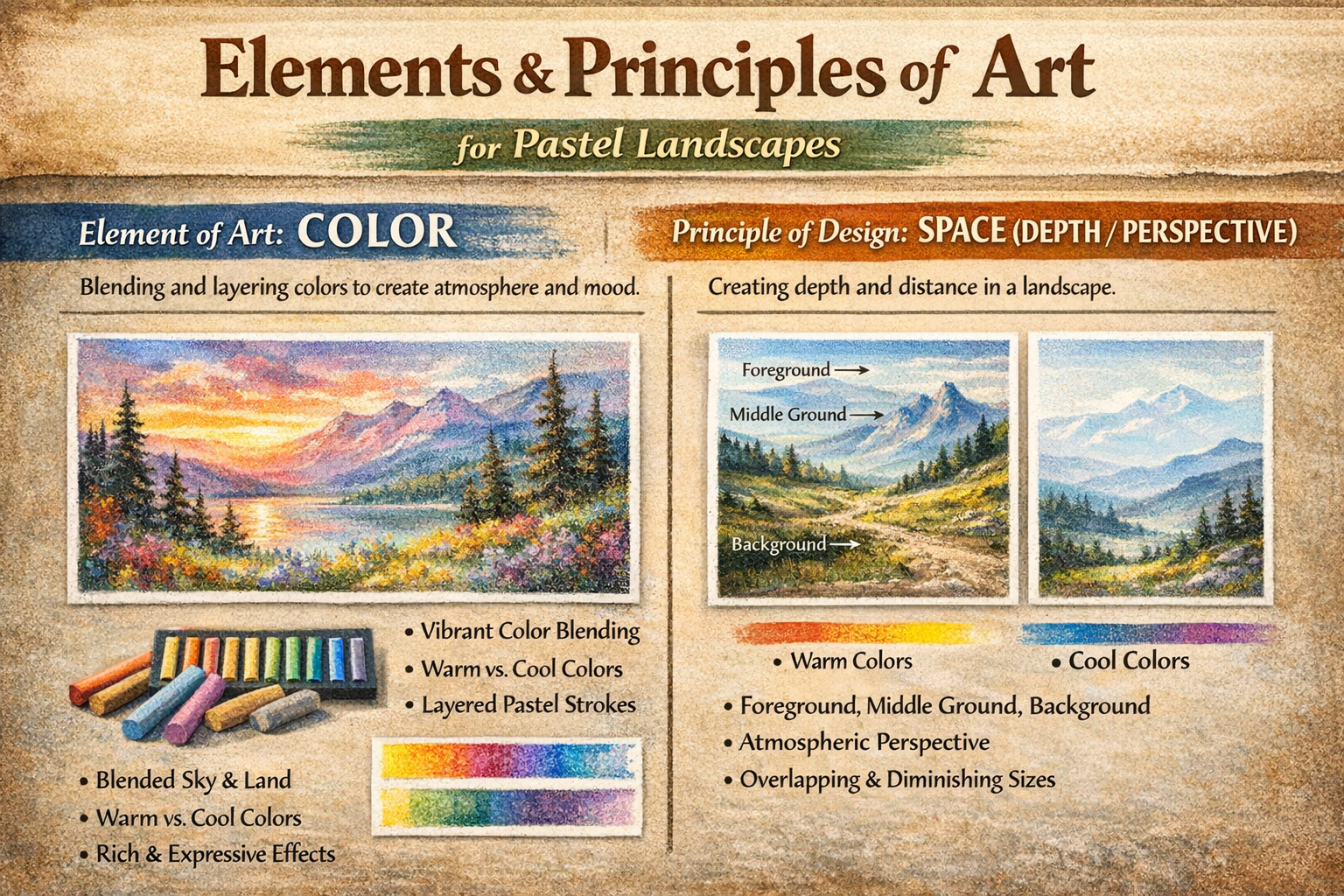
Element of Art
Space
Definition:
The area around, between, above, below, or within objects.
Key Points:
* Creates depth and perspective
* Can be open or crowded
* Helps organize composition
Types of Space:
* Positive space – objects
* Negative space – empty areas
* Foreground – front
* Middle ground – middle
* Background – back
* Deep space – illusion of depth
* Shallow space – little depth

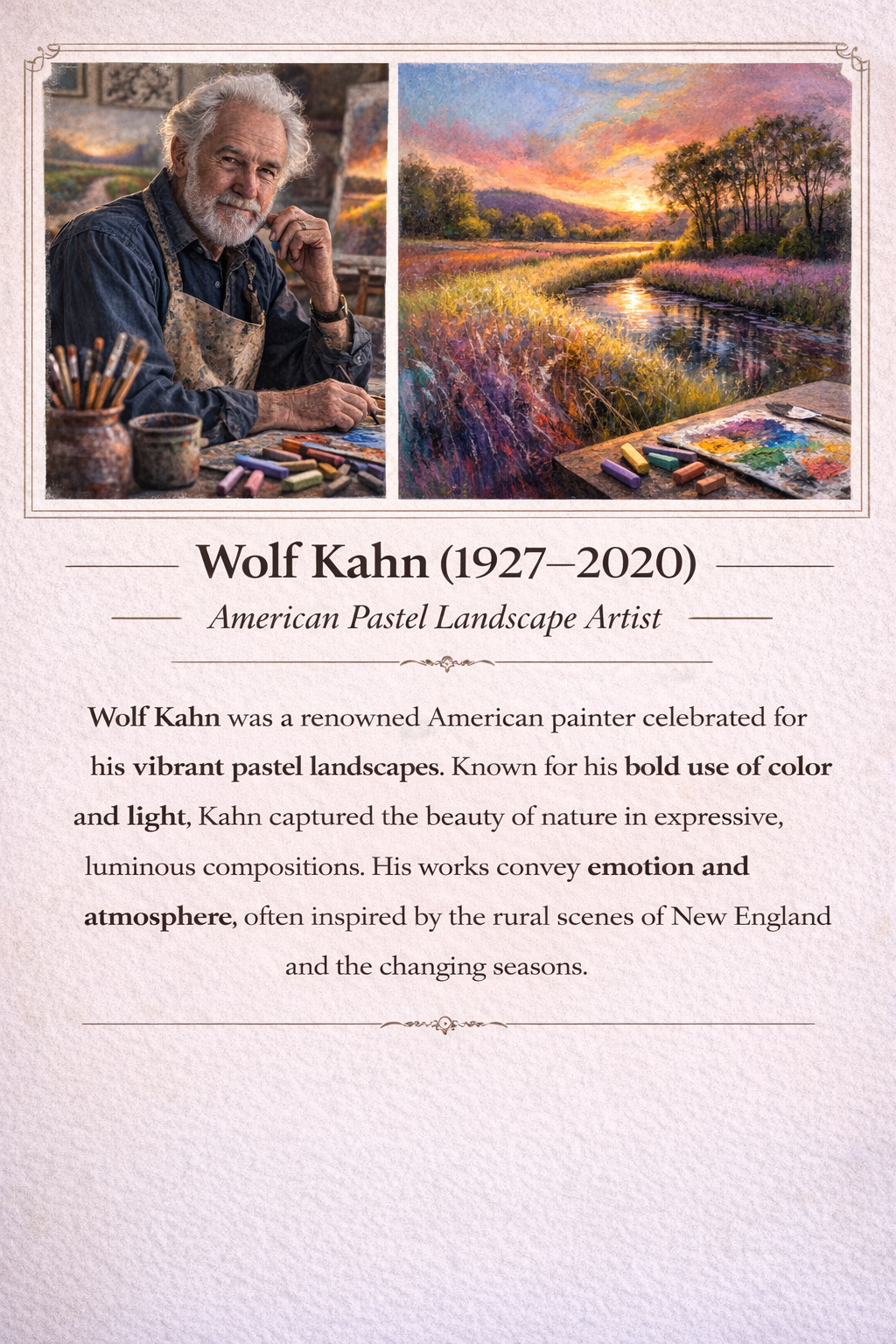
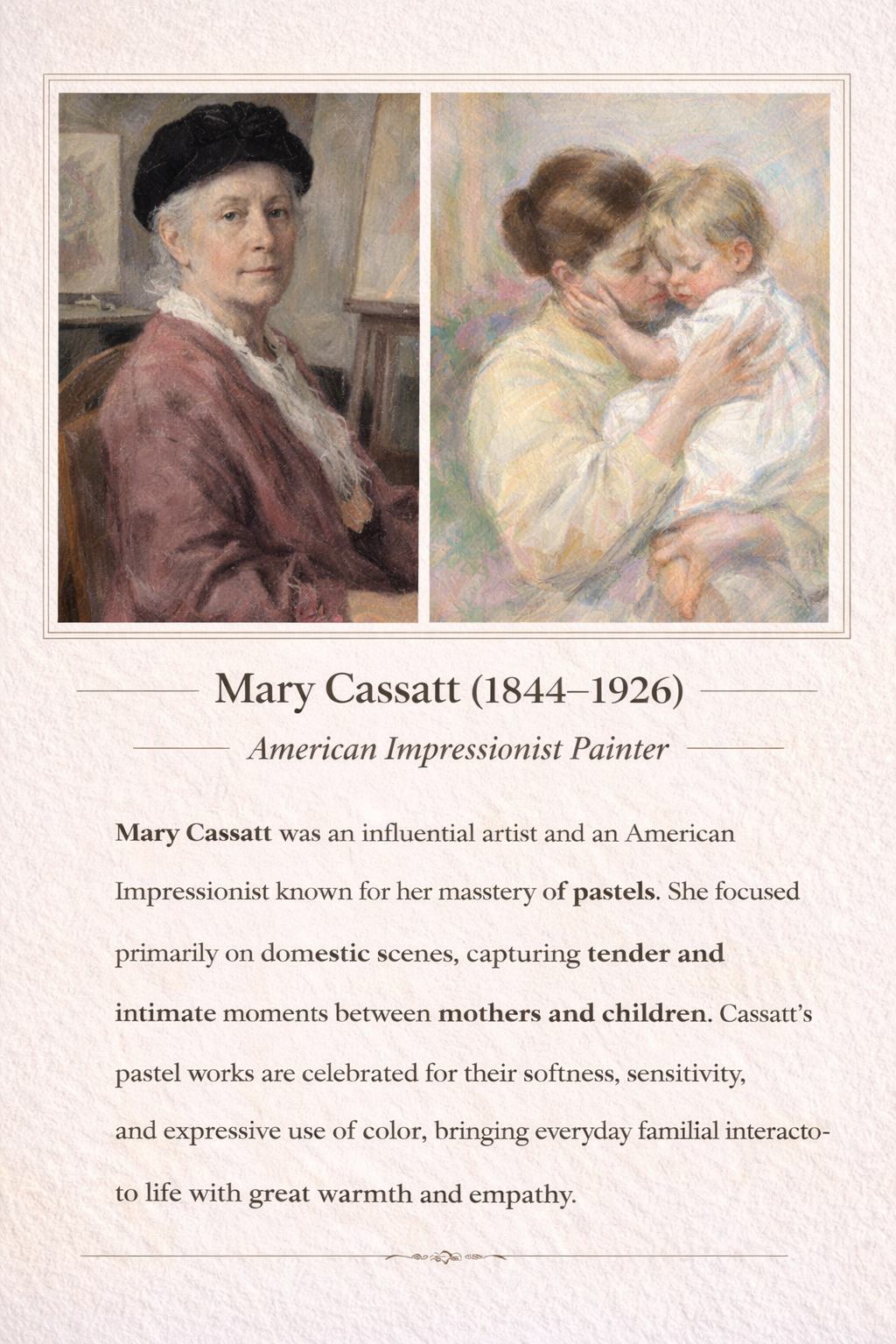
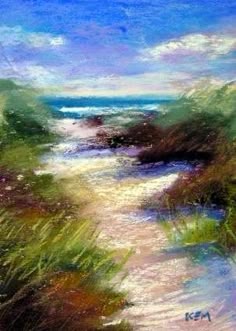
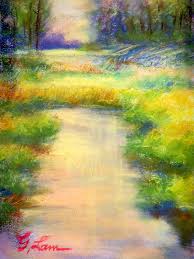
Pastel Landcape Artists

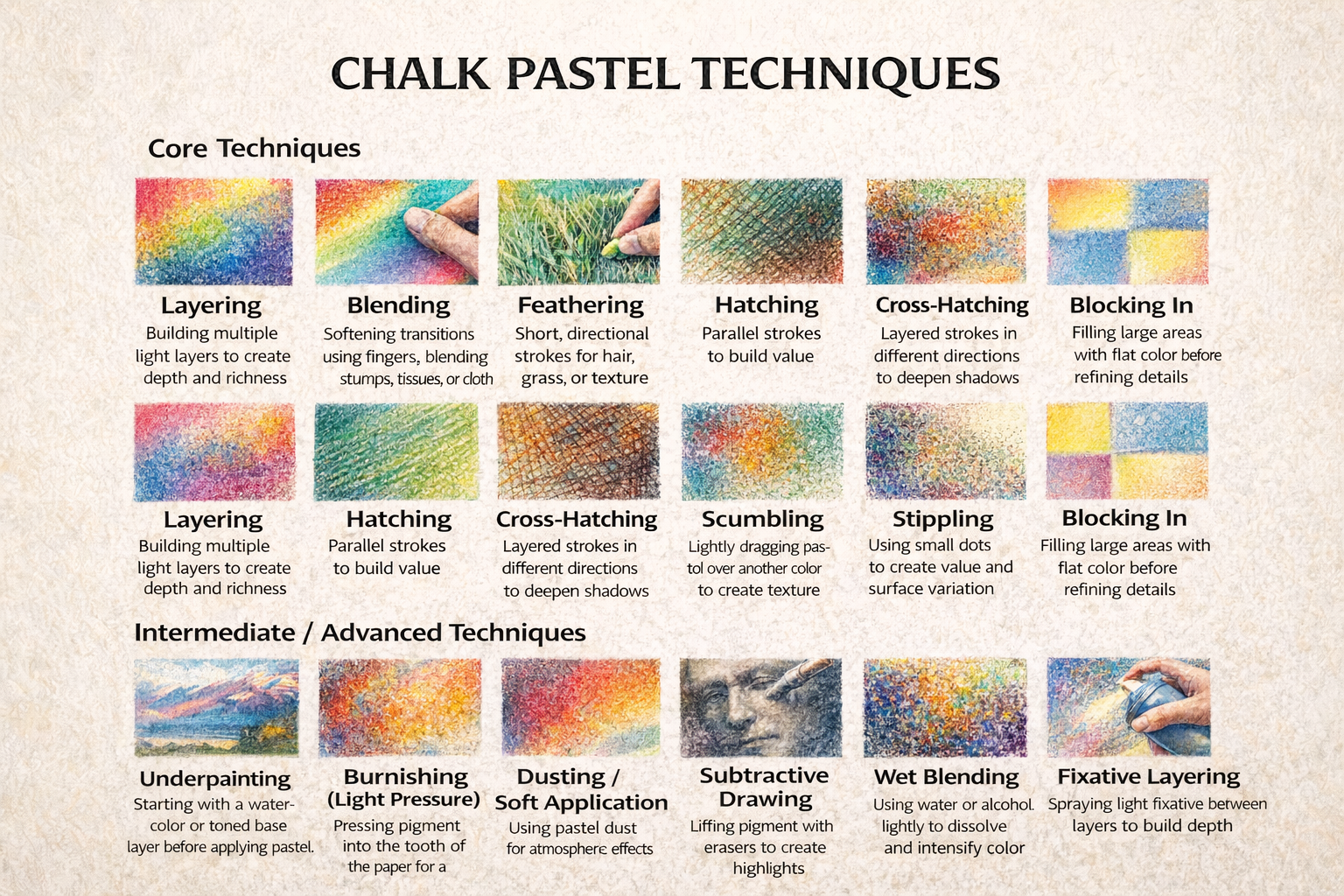
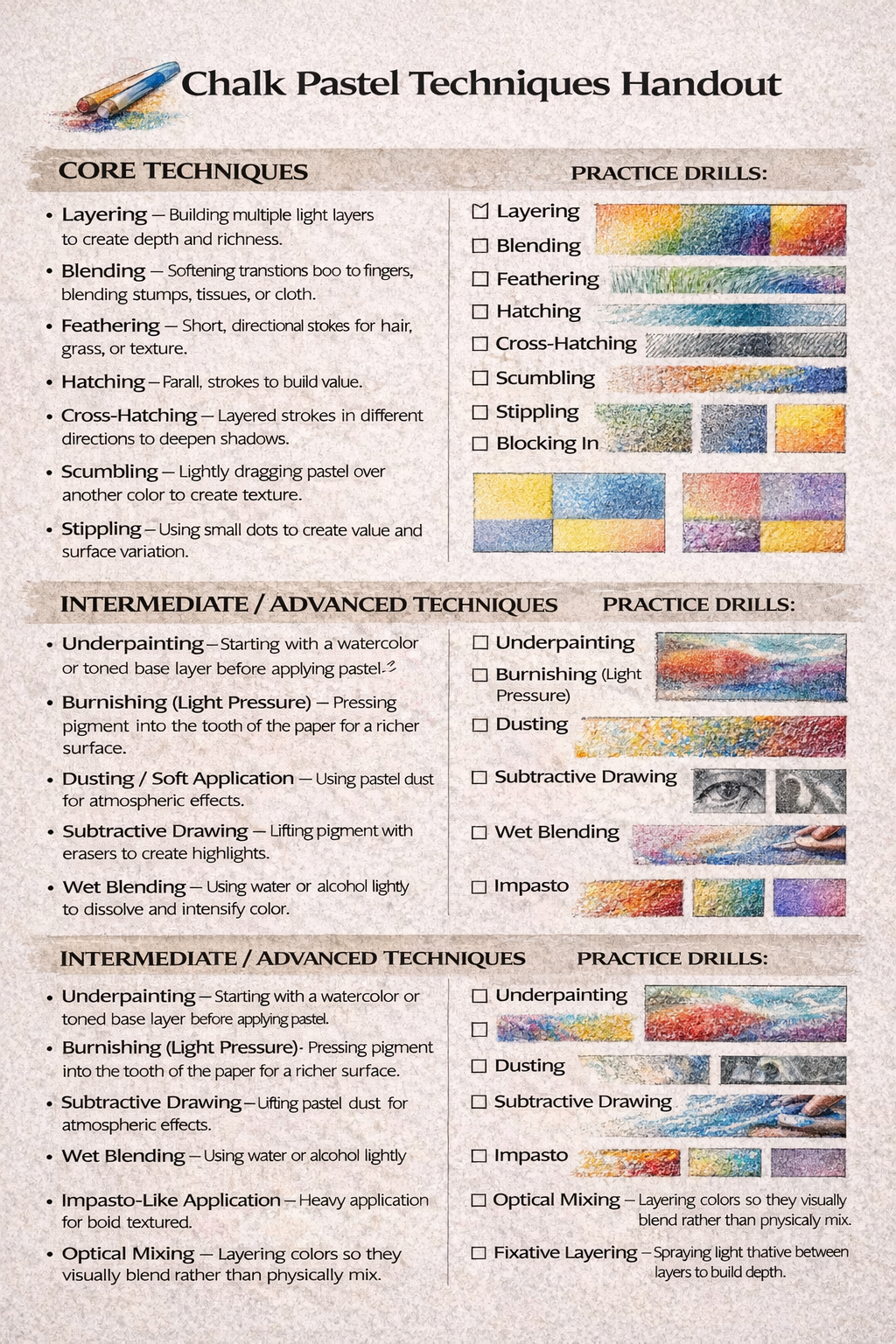
Chalk Pastel Techniques
Core Techniques
* Layering – Building multiple light layers to create depth and richness.
* Blending – Softening transitions using fingers, blending stumps, tissues, or cloth.
* Feathering – Short, directional strokes for hair, grass, or texture.
* Hatching – Parallel strokes to build value.
* Cross-Hatching – Layered strokes in different directions to deepen shadows.
* Scumbling – Lightly dragging pastel over another color to create texture.
* Stippling – Using small dots to create value and surface variation.
* Blocking In – Filling large areas with flat color before refining details.
Intermediate / Advanced Techniques
* Underpainting – Starting with a watercolor or toned base layer before applying pastel.
* Burnishing (Light Pressure) – Pressing pigment into the tooth of the paper for a richer surface.
* Dusting / Soft Application – Using pastel dust for atmospheric effects.
* Subtractive Drawing – Lifting pigment with erasers to create highlights.
* Wet Blending – Using water or alcohol lightly to dissolve and intensify color.
* Impasto-Like Application – Heavy application for bold, textured surfaces.
* Optical Mixing – Layering colors so they visually blend rather than physically mix.
* Fixative Layering – Spraying light fixative between layers to build depth.
Handout
Project Demonstration
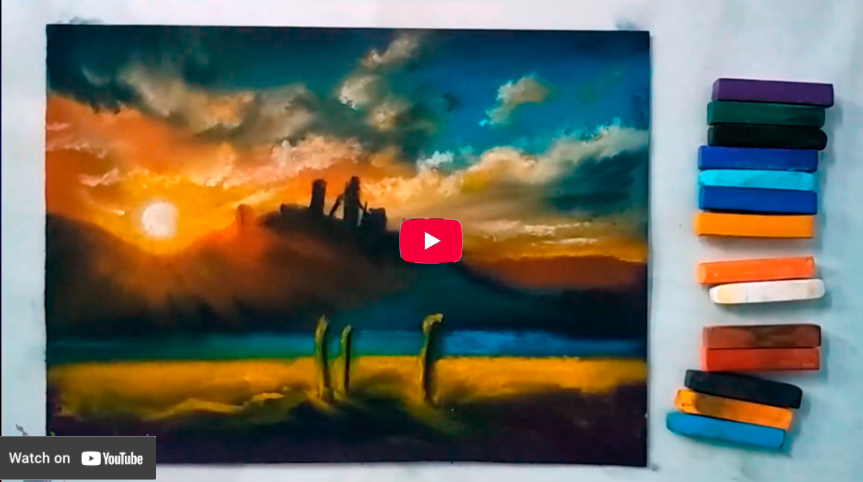

Examples



“Creativity takes courage.”

Cloverleaf High School
Follow Us