Final Meal
Project Overview
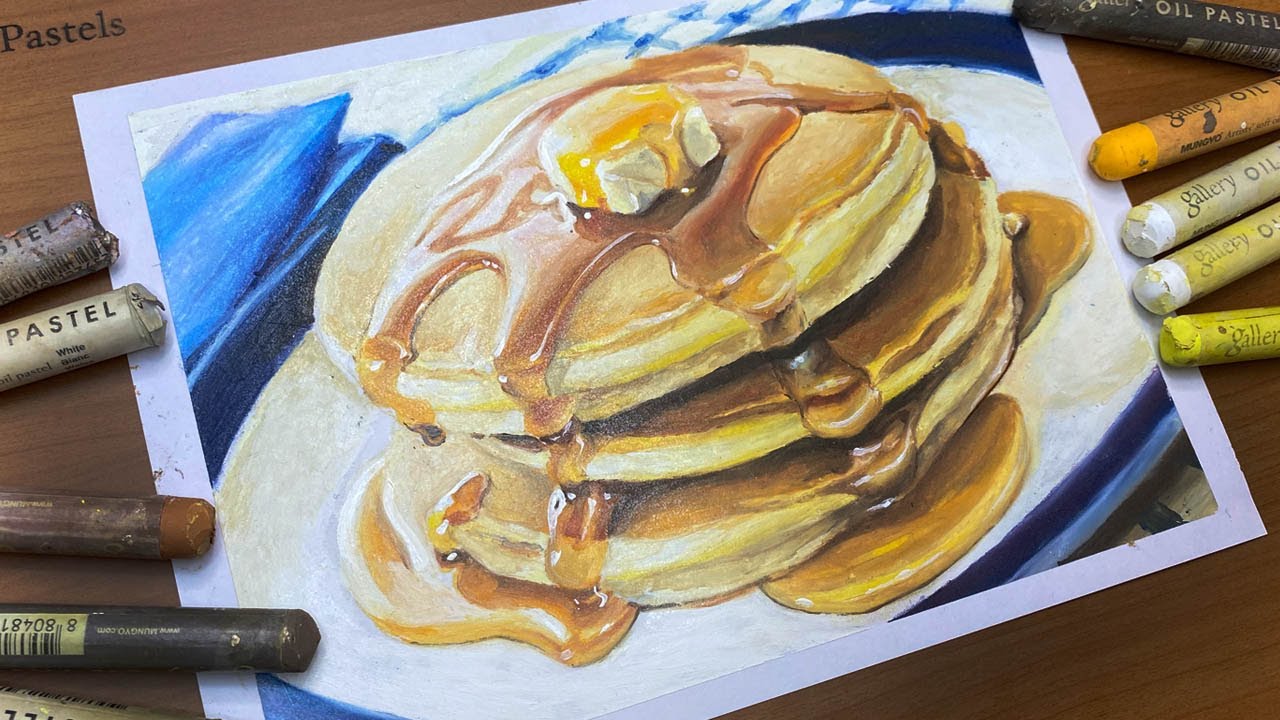
In this advanced oil pastel assignment, students will create a still life drawing of their all-time favorite meal, imagining it as the final meal they would ever have. The focus is on observation, composition, texture, and color, as well as capturing the mood and personal significance of the meal. Students are encouraged to photograph their meal from an interesting angle—such as a close-up, overhead, or dramatic foreshortening—to create a dynamic composition for their drawing.
This project combines technical skill with personal expression, allowing students to explore color blending, layering, and texture while making creative choices in presentation.
Objectives
Students will:
* Plan a still life composition of their favorite meal, choosing an angle that is visually dynamic.
* Observe and replicate textures, colors, and forms using oil pastels.
* Apply layering, blending, and detail work to create depth and realism.
* Experiment with composition to make the piece visually appealing and engaging.
* Express personal meaning and storytelling through their choice of meal and presentation.
Materials
* Oil pastels (full color range)
* Heavyweight drawing paper or pastel paper
* Pencil for light sketching
* Blending tools (fingers, stumps, or cotton swabs)
* Optional: photograph reference of the meal (recommended)
Process
1. Meal Selection & Photography: Arrange your favorite meal and take a photograph from an interesting angle. Consider close-ups, side views, or dramatic perspectives to make it visually engaging.
2. Sketching: Lightly outline your composition on the paper.
3. Base Layer: Block in basic shapes and colors for the meal components.
4. Layering & Blending: Build depth with multiple layers of oil pastel. Blend colors to achieve texture for meats, vegetables, sauces, or other elements.
5. Detailing & Highlights: Add details such as reflections, seasoning, and highlights to make the food feel realistic and appetizing.
6. Final Refinement: Ensure composition balance and visual focus. Emphasize textures, contrasts, and vibrant colors.
Assessment Criteria
* Effective use of oil pastel techniques: blending, layering, and texture
* Observational accuracy and attention to detail
* Strong composition and visually dynamic angle
* Expressive color and contrast choices
* Overall craftsmanship and presentation
Creative Challenge
Think about how to make your “last meal” feel special and memorable on paper. Could a fork or napkin create depth? Could part of the plate extend out of frame for drama? Use lighting, perspective, and color to make your favorite meal visually irresistible.
Learning Objectives / Student Targets
By the end of this project, students will be able to:
1. Observation & Representation
* Accurately observe and document real objects through drawing.
* Demonstrate proportional relationships and spatial awareness in a still life composition.
2. Material & Technical Skill
* Apply value and shading with graphite to create depth and form.
* Use ink to reinforce contour, emphasize contrast, and define edges.
* Incorporate oil pastel to build bold color, expressive texture, and layered richness.
* Use colored pencil to refine details, enhance form, and smooth transitions in color and tone.
3. Integration of Media
* Thoughtfully combine pencil, ink, oil pastel, and colored pencil into a unified visual whole.
* Make intentional decisions about where each medium contributes best to overall structure, mood, and emphasis.
4. Composition & Design
* Organize visual elements to demonstrate balance, proportion, and dynamic rhythm.
* Guide the viewer’s eye through strategic use of contrast, mark-making, and color placement.
5. Creative & Critical Thinking
* Experiment with media behaviors and problem-solve accordingly.
* Communicate personal artistic decisions through expressive mark-making and color choices.
6. Reflection & Artistic Growth
* Articulate strengths, challenges, and artistic intent in reflection or critique.
* Demonstrate increased confidence and competence with multi‑media processes.
Ohio Fine Arts Standards (Visual Arts)
Creating (CR)
Develop a practice of engaging with sources for idea generation.
Students use multiple approaches (observational drawing, thumbnail sketches, exploratory studies) to begin creative work.
Select appropriate creative processes for solutions to artistic problems.
Students organize and develop artistic ideas through intentional planning and problem-solving strategies.
Performing (PE)
Refine artisanship while modeling persistence.
Students demonstrate quality craftsmanship through careful selection, handling, and care of art materials and tools.
Apply and defend the selection of materials and techniques.
Students individually or collaboratively apply tools, media, and techniques with precision to enhance artistic intent.
Organize elements of art and principles of design to intentionally construct works.
Students intentionally use value, texture, color layering, and compositional strategies to strengthen artistic quality.
Responding (RE)
Expand relevant vocabulary to analyze and interpret works of art.
Students use art vocabulary to express preferences with evidence and supporting reasons.
Develop art criticism methods when responding to artworks.
Students analyze how artistic methods (value, texture, layering, compositional strategies) convey mood or tone and interpret contextual meaning.
Apply self-assessment and goal-setting practices to revise artworks and document growth.
Students evaluate and refine works of art through persistence, practice, reflection, and established criteria.
Explain the relationship between cultures, communities, and artists.
Students hypothesize how art reflects observation, investigation, or cultural meaning.
Connecting (CO)
Connect universal themes in visual arts to personal life experiences.
Students create works reflecting personal connections to experiences, knowledge, or observation.
Investigate emotional experiences through personal and collaborative artmaking.
Students relate artistic ideas across disciplines (e.g., how material behavior influences compositional decisions).
Grading Rubric
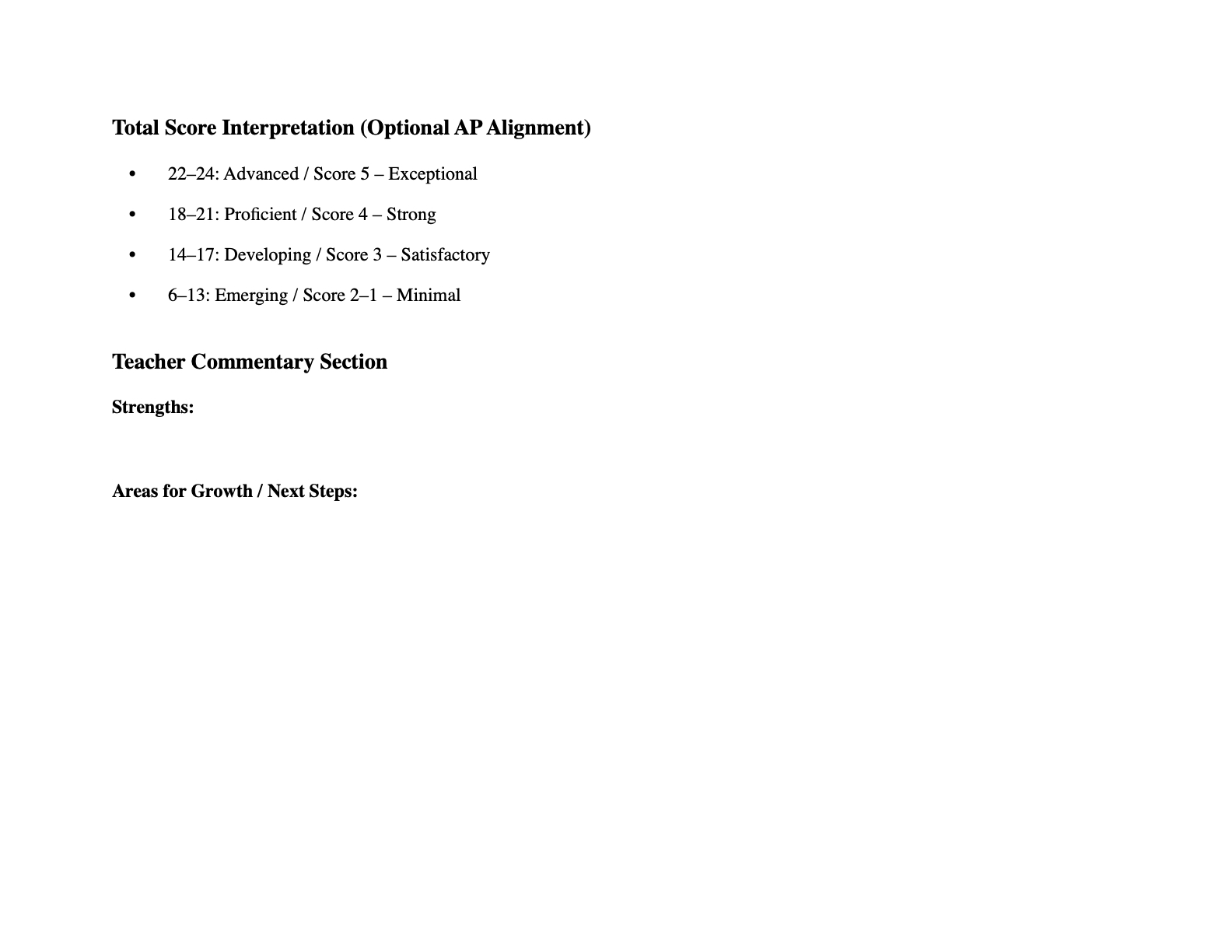
Rubrics have become popular with teachers as a means of communicating expectations for an assignment, providing focused feedback on works in progress, and grading final products. A rubric is a document that articulates the expectations for an assignment by listing the criteria, or what counts, and describing levels of quality from excellent to poor.

Student Reflection
A student reflection is a brief, thoughtful explanation of how and why a student created their artwork, including the choices they made, challenges they faced, and what they learned during the process. In art, reflection is important because it helps students develop critical thinking, recognize growth, strengthen their creative decision-making, and take ownership of their artistic development.

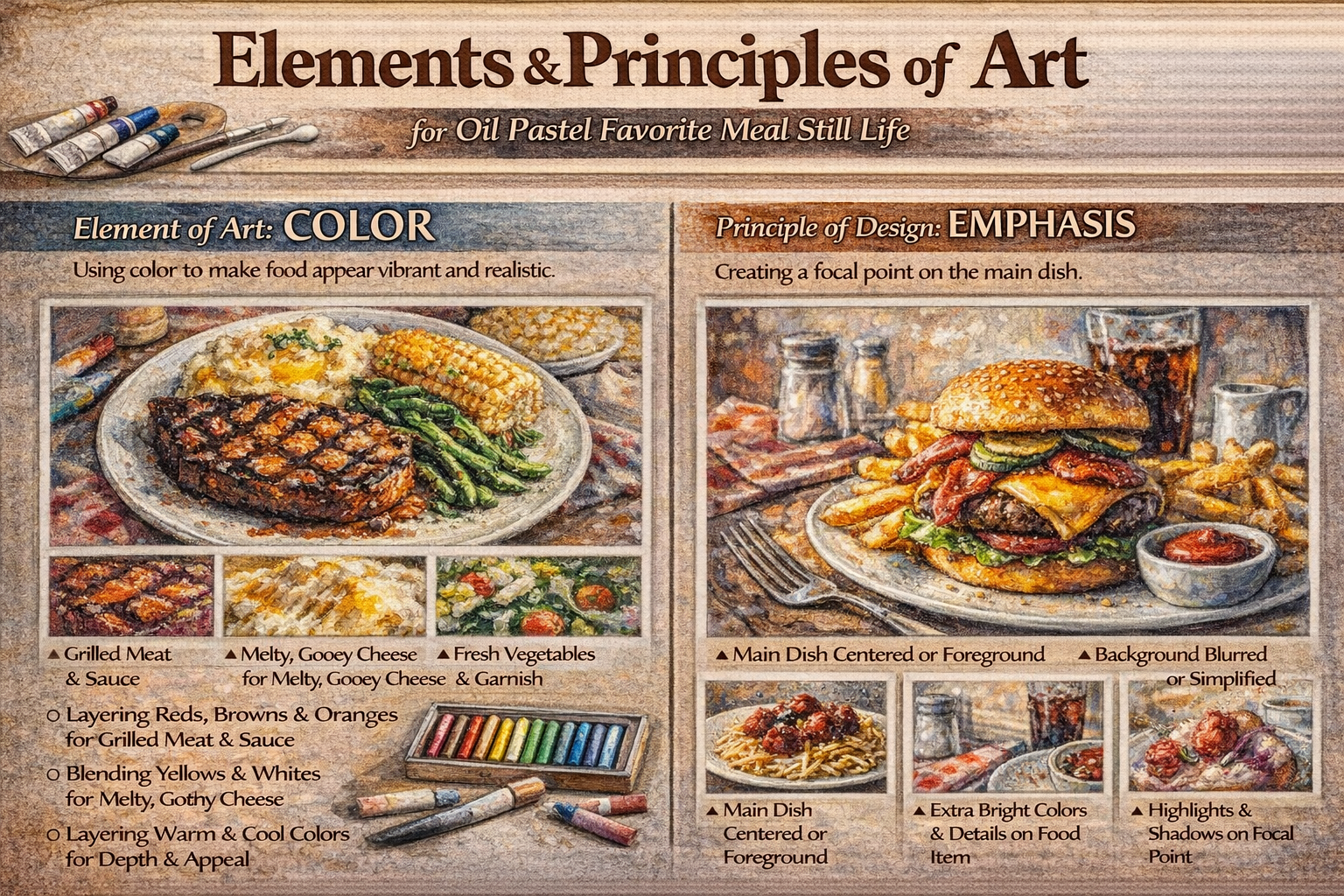
Element of Art & Principle of Design
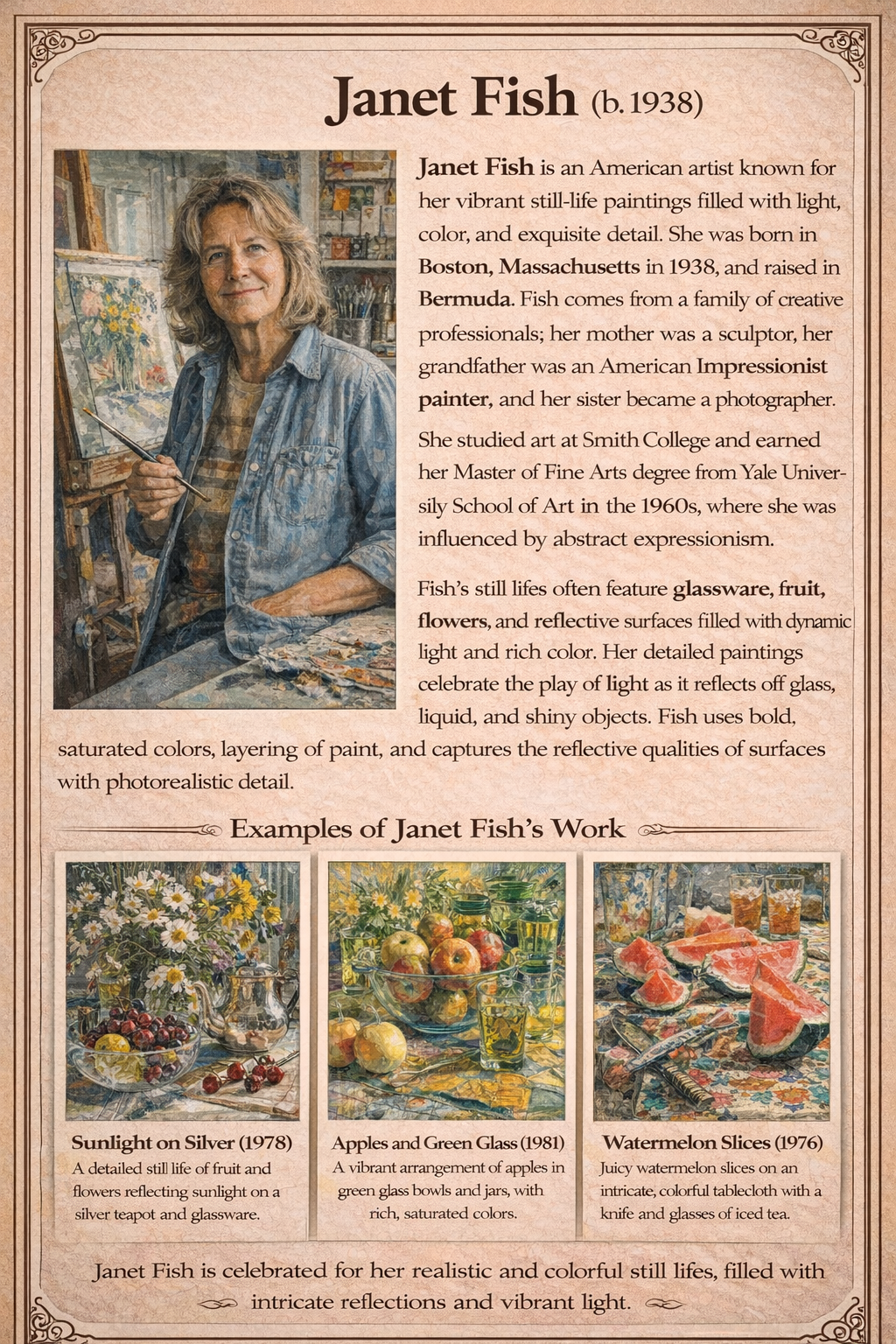
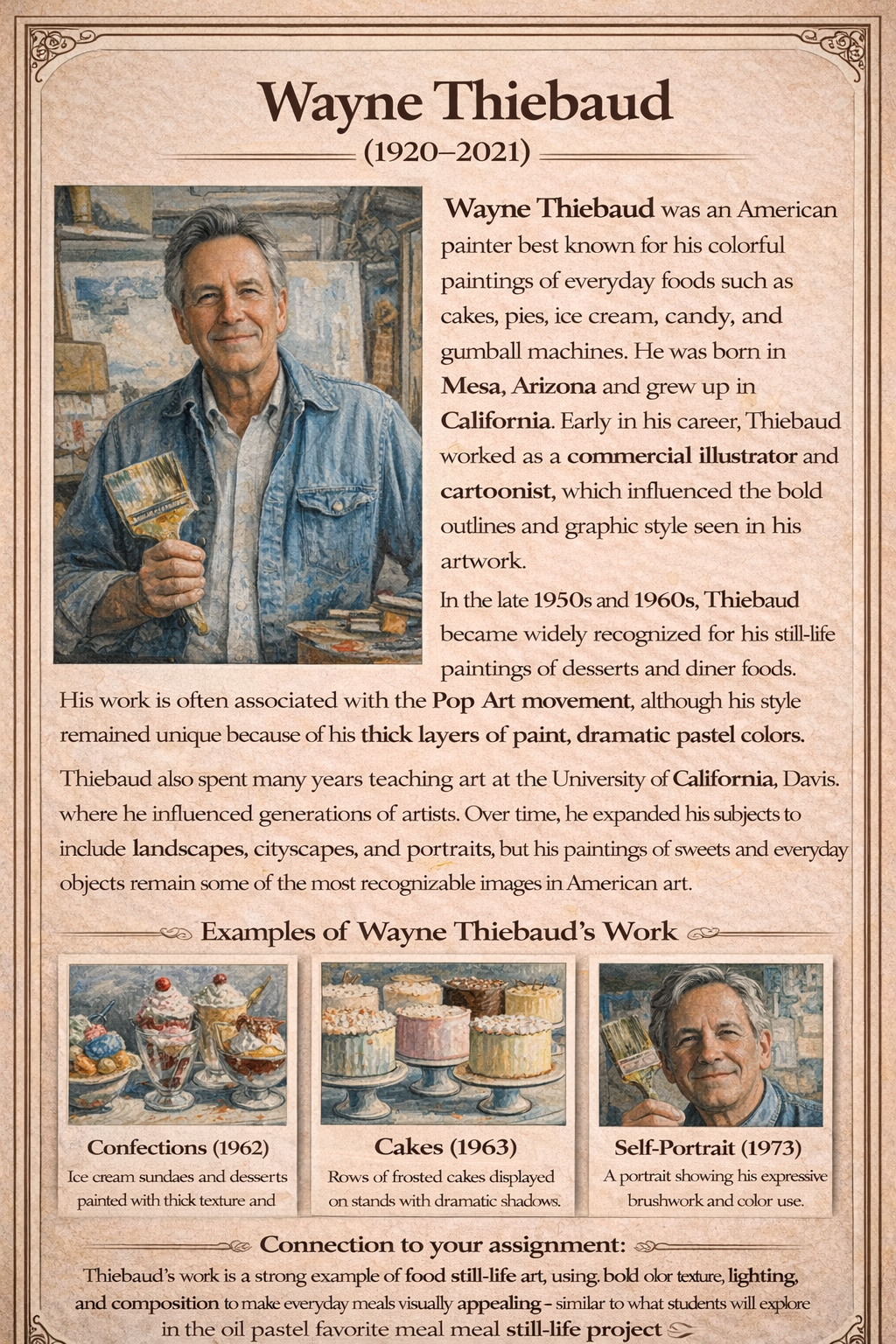
Food Art Artists
Techniques

Examples


“Creativity takes courage.”

Cloverleaf High School
Follow Us