Shadow Painting
Project Overview
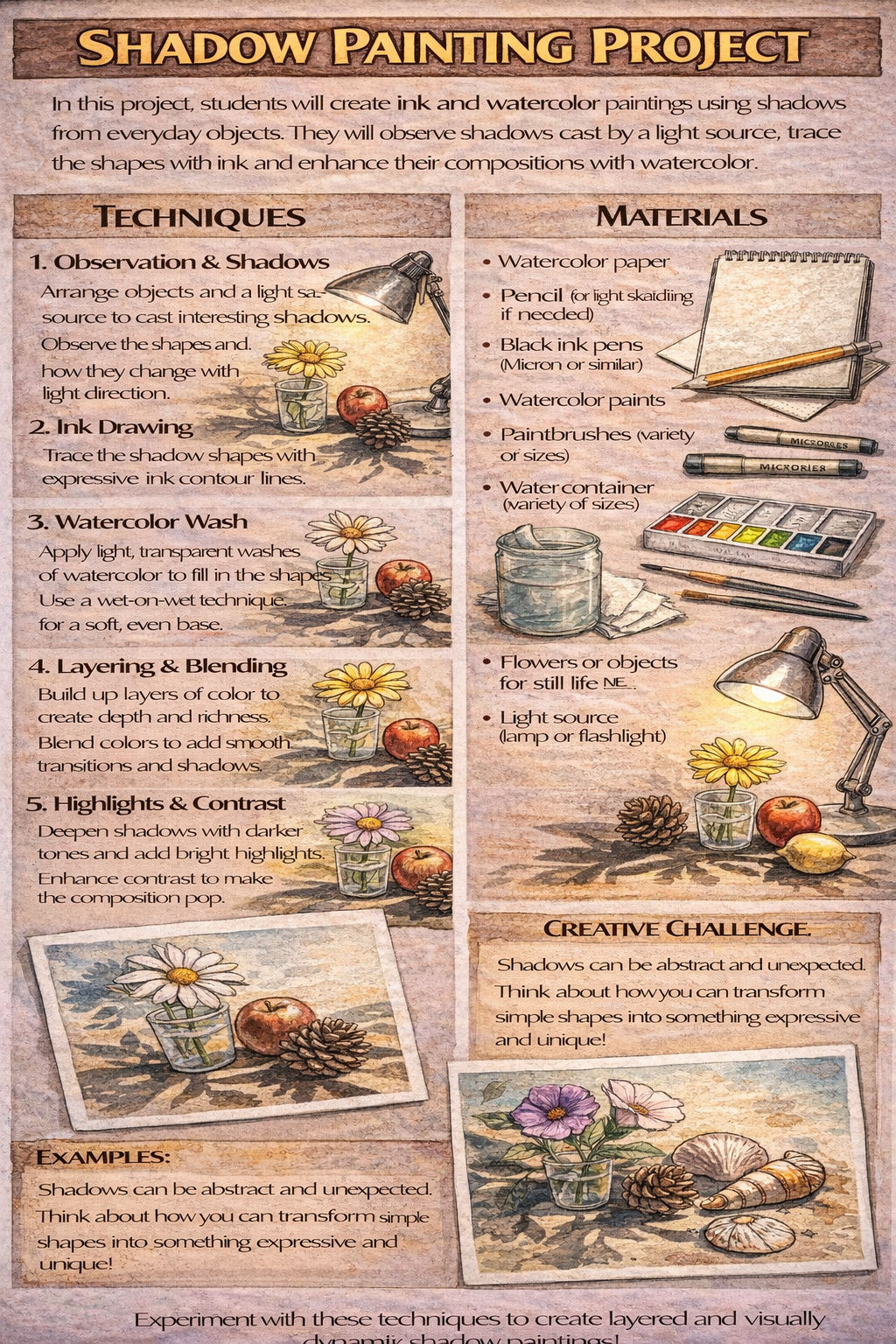
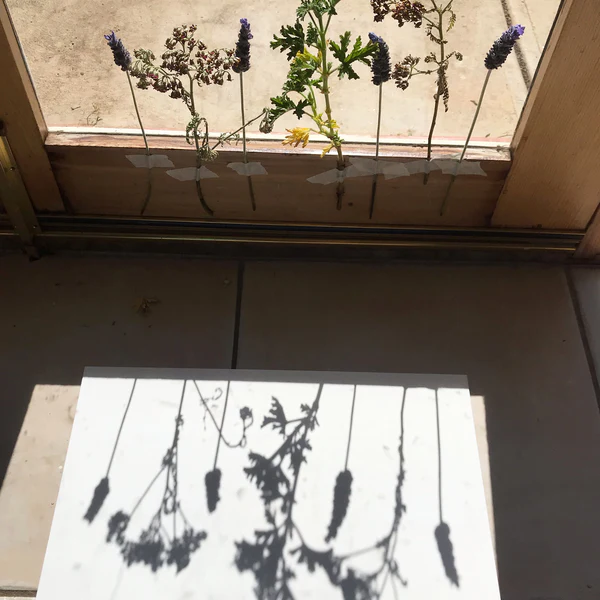
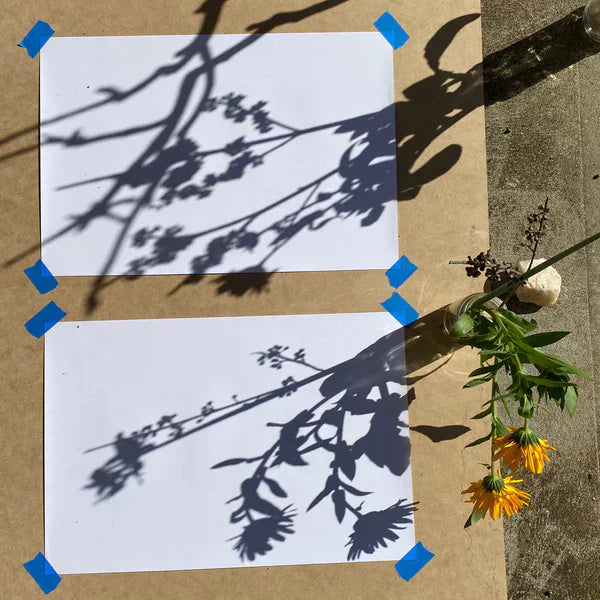
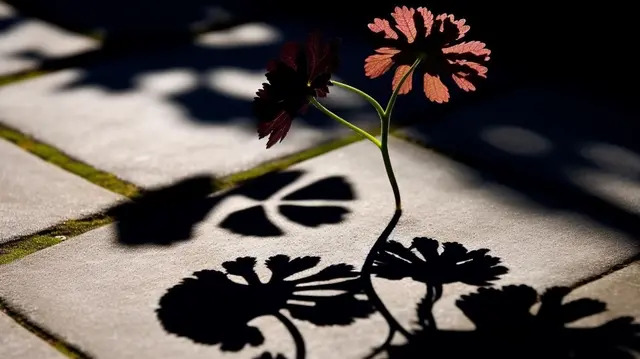
In this project, students will create an ink and watercolor painting based on observed shadows. Using a light source, students will arrange flowers or everyday objects to cast shadows onto a surface. They will carefully observe and trace these shadows using ink, then enhance their compositions with watercolor to add depth, contrast, and visual interest. The goal is to explore how light, shadow, line, and color work together to create form and mood. Students will focus on observation skills, expressive line work, and watercolor techniques to transform simple shadow shapes into dynamic and visually engaging artworks.
Objectives
Students will:
* Apply elements of art (line, value, shape, color, contrast).
* Observe and translate real-life shadows into drawn forms.
* Use ink to create clean, expressive contour lines.
* Apply watercolor techniques (wash, layering, blending) to enhance composition.
* Demonstrate understanding of light and shadow relationships.
* Show craftsmanship and intentional decision-making in both drawing and painting.
Materials
* Watercolor paper
* Pencil (for light sketching if needed)
* Black ink pens (Micron or similar)
* Watercolor paints
* Paintbrushes (variety of sizes)
* Water containers and paper towels
* Flowers or objects for still life
* Light source (lamp or flashlight)
* Protective covering for workspace
Process
1. Setup & Observation:
Arrange flowers or objects and use a light source to cast strong shadows. Observe how the shadows change based on light direction.
2. Planning & Composition:
Decide on an interesting composition based on the shadows. Consider placement, overlap, and negative space.
3. Sketching (Optional):
Lightly sketch major shapes if needed, focusing on the shadow outlines rather than details of the object.
4. Ink Drawing:
Trace the shadow shapes using ink. Focus on confident, clean lines to define forms and create contrast.
5. Watercolor Application:
Apply watercolor to enhance the composition. Use washes and layering to create depth, mood, and emphasis.
6. Refinement:
Add additional ink details if desired. Adjust color intensity and clean up edges.
7. Final Presentation:
Ensure the artwork is complete, dry, and ready for display. Reflect on how light and shadow were used in the final piece.
Assessment Criteria
* Clear observation and translation of shadows into line work
* Effective use of ink for clean, confident outlines
* Skillful use of watercolor techniques
* Strong use of contrast and value
* Creative composition and use of space
* Craftsmanship and overall presentation quality
Creative Challenge
Shadows can be abstract and unexpected. Consider how you can transform simple shapes into something expressive and unique. How does changing the light direction affect your composition?
Think about how color can enhance mood—will your piece feel calm, dramatic, or vibrant? Can you exaggerate or simplify shadows to create a stronger design?
This project encourages students to combine observation, drawing, and painting to explore how light shapes the way we see the world.
Learning Objectives / Student Targets
Learning Targets
By the end of this project, students will be able to:
1. Understanding of Light & Shadow
* Identify how light creates shadows and affects the appearance of objects.
* Observe and accurately translate shadow shapes into drawn forms.
* Demonstrate awareness of how light direction changes shadow size and placement.
2. Observation & Representation Skills
* Carefully observe real objects and their shadows from a still-life setup.
* Accurately trace and represent shadow shapes using drawing techniques.
* Simplify complex forms into clear, readable shapes.
3. Ink Drawing Techniques
* Use ink to create clean, confident contour lines.
* Demonstrate control of line weight and precision.
* Use line to define shape, edges, and composition.
4. Watercolor Techniques & Application
* Apply watercolor using techniques such as washes, layering, and blending.
* Use color intentionally to enhance mood, depth, and contrast.
* Demonstrate control of water and pigment for clean, effective results.
5. Contrast, Value & Composition
* Use contrast (light vs. dark) to create emphasis and visual interest.
* Organize shapes to create a balanced and engaging composition.
* Use positive and negative space effectively within the artwork.
6. Creative & Critical Thinking
* Experiment with ways to interpret and stylize shadow shapes.
* Make intentional decisions about color, composition, and line.
* Solve challenges related to observation, spacing, and media use.
7. Craftsmanship & Artistic Growth
* Demonstrate neatness, attention to detail, and care in both ink and watercolor work.
* Reflect on strengths and areas for improvement in their artwork.
* Show growth in confidence using observational drawing and painting techniques.
Ohio Fine Arts Standards (Visual Arts)
Creating (Cr)
* Generate and conceptualize artistic ideas based on direct observation of light and shadow.
* Organize and develop artistic ideas using elements of art (line, value, shape, color, contrast).
* Apply creative thinking to design a composition based on shadow forms and light direction.
* Experiment with materials (ink, watercolor, light sources) to explore ways of representing form and atmosphere.
Producing / Performing (Pr)
* Demonstrate skill and craftsmanship in the use of drawing and painting materials (ink and watercolor).
* Create a two-dimensional artwork based on observed shadow shapes.
* Apply techniques such as contour line drawing, watercolor washes, and layering.
* Use elements and principles of design to create a visually effective composition.
* Solve visual problems related to observation, composition, and media control.
Responding (Re)
* Analyze how artists use light, shadow, and contrast to create depth and mood.
* Interpret how artistic choices (line quality, color, value) communicate meaning and atmosphere.
* Reflect on personal artwork and identify strengths and areas for improvement.
* Use appropriate art vocabulary (contrast, value, contour, wash, composition) to describe processes and outcomes.
Connecting (Co)
* Relate artistic ideas and work to personal experiences with light and environment.
* Identify how light and shadow are used in real-world contexts (nature, photography, design).
* Understand connections between art and science concepts such as light source, reflection, and shadow formation.
* Make connections between visual art and observation skills used in other disciplines.
Enduring Understandings (Ohio Visual Art Framework)
* Personal Choice and Vision: Students express ideas through composition and color choices.
* Critical and Creative Thinking: Students solve problems related to observation, media, and design.
* Authentic Application: Students apply drawing and painting skills to represent real-world phenomena.
* Literacy in the Arts: Students interpret and communicate meaning through visual elements and reflection.
Summary for Your Lesson Plan
This shadow ink and watercolor project aligns with Ohio’s standards by requiring students to:
* Create artwork based on observation of light and shadow
* Produce a two-dimensional composition using ink and watercolor techniques
* Respond through reflection and analysis of artistic choices
* Connect their work to real-world concepts of light, science, and environment
Grading Rubric
Rubrics have become popular with teachers as a means of communicating expectations for an assignment, providing focused feedback on works in progress, and grading final products. A rubric is a document that articulates the expectations for an assignment by listing the criteria, or what counts, and describing levels of quality from excellent to poor.


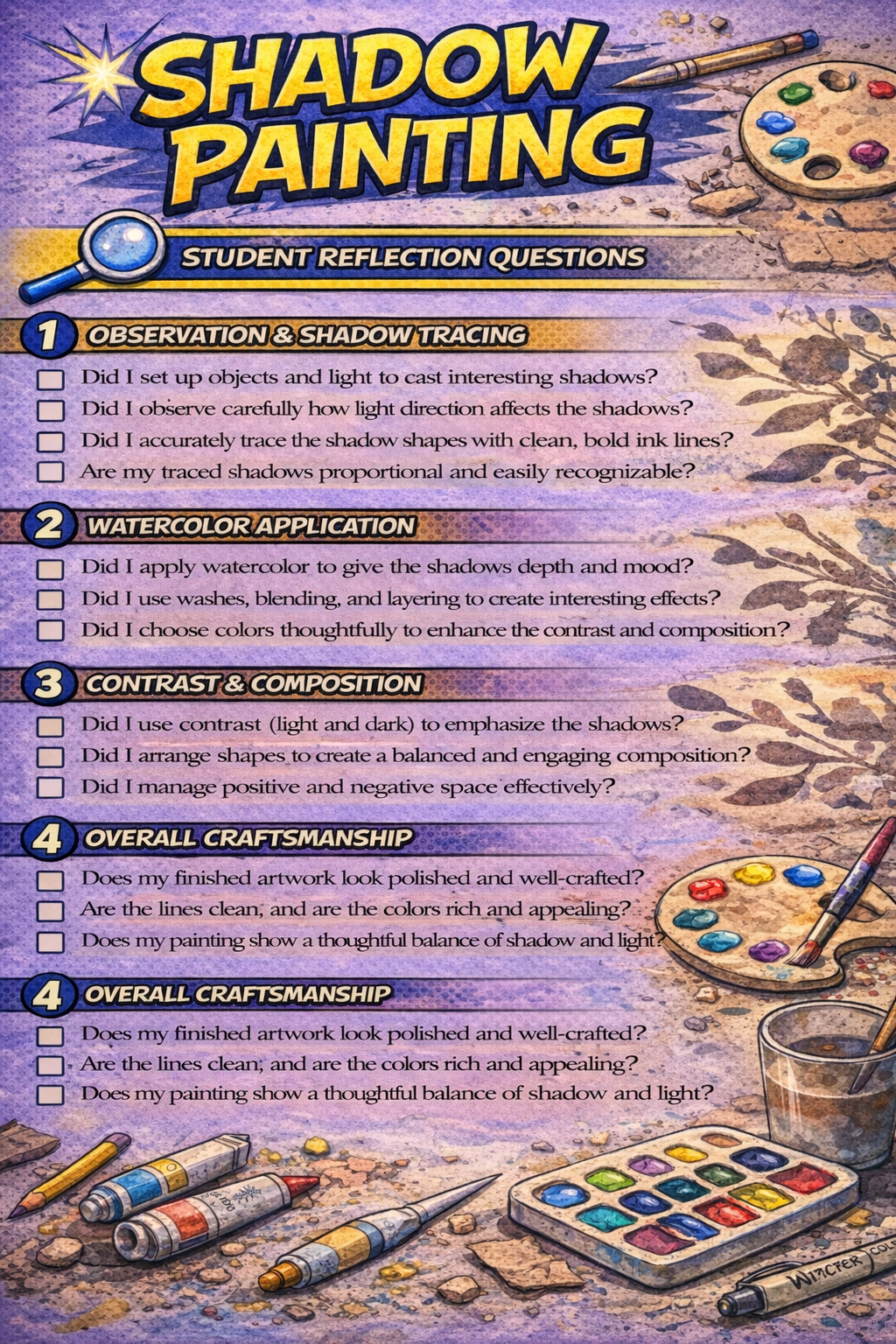
Student Reflection
A student reflection is a brief, thoughtful explanation of how and why a student created their artwork, including the choices they made, challenges they faced, and what they learned during the process. In art, reflection is important because it helps students develop critical thinking, recognize growth, strengthen their creative decision-making, and take ownership of their artistic development.
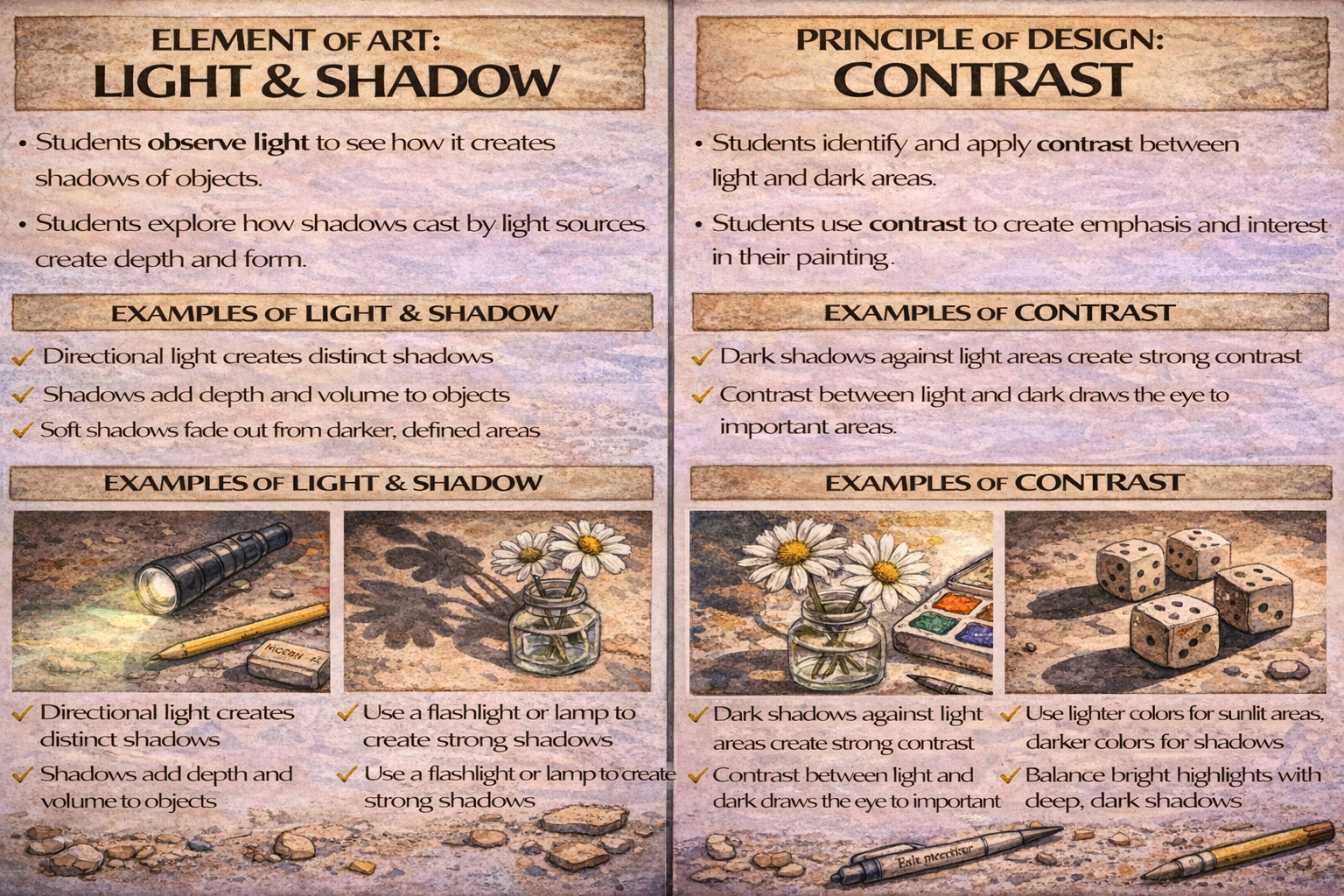
Element of Art & Principle of Design
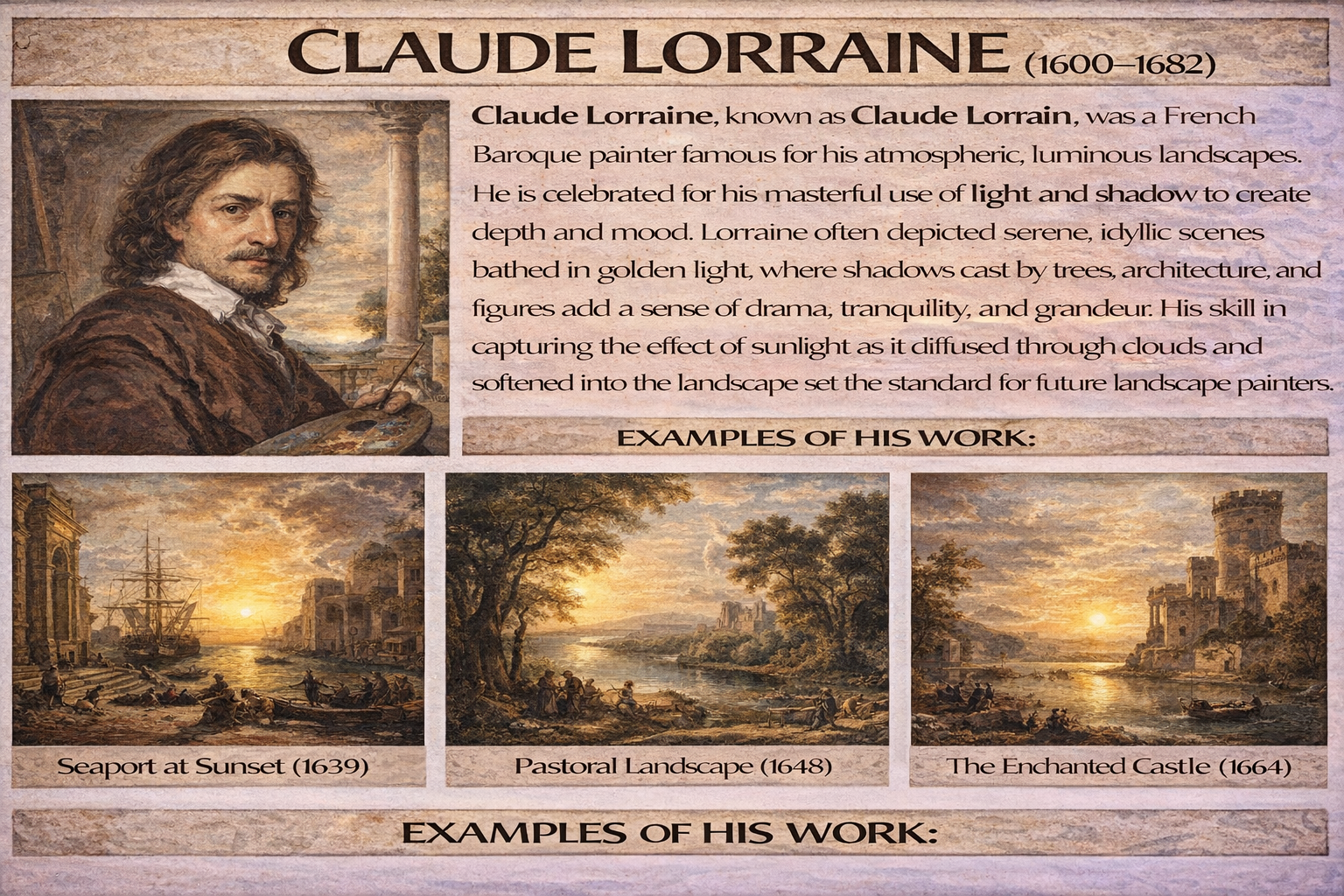
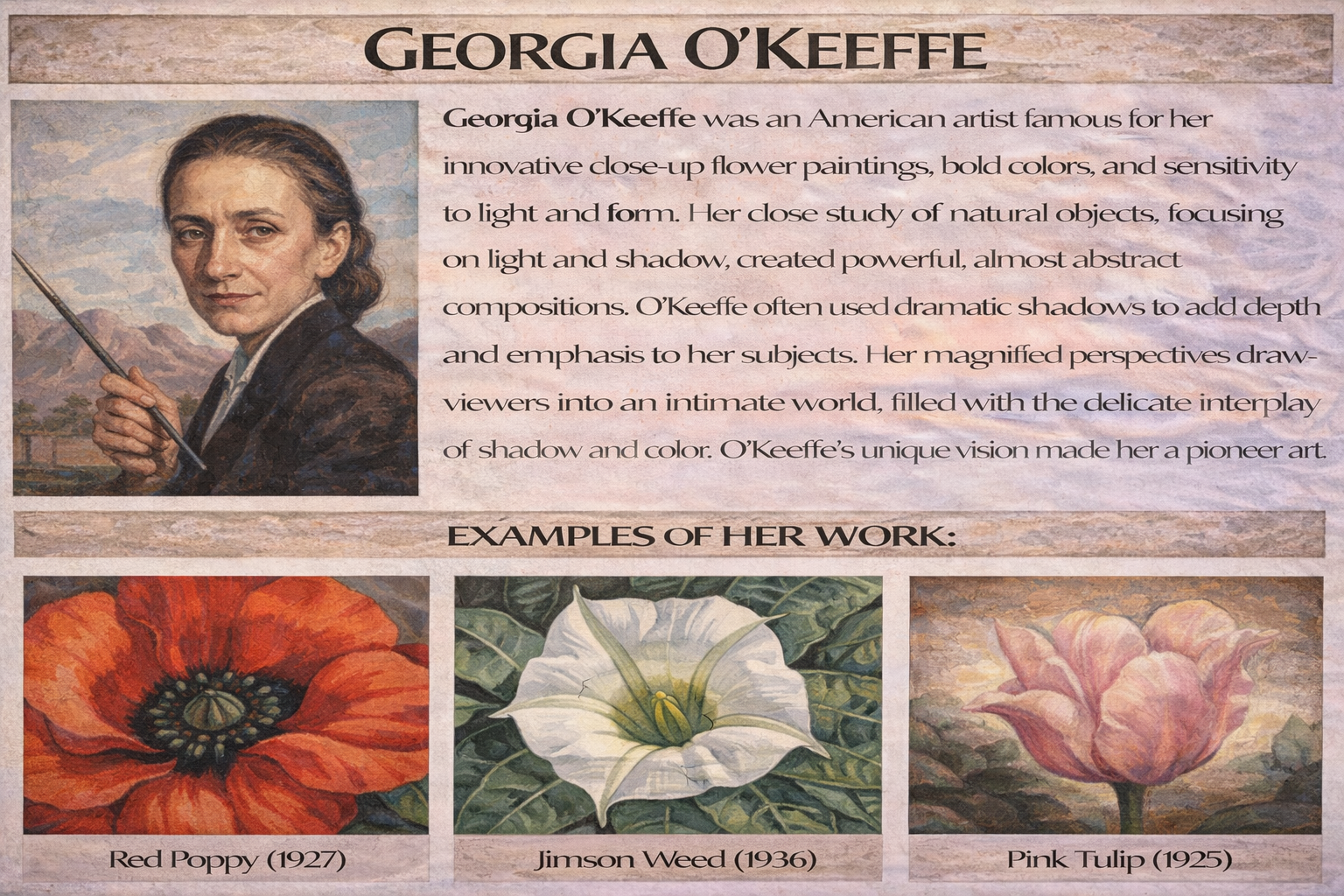
Famous Artists
Techniques
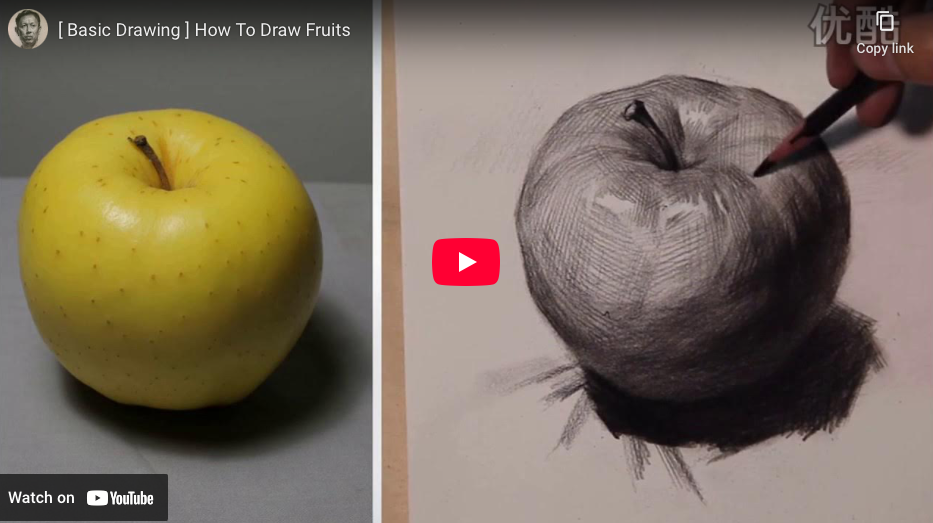
Project Demonstrations
Examples
“Creativity takes courage.”

Cloverleaf High School
Follow Us