Radial Relief Sculpture
Project Overview
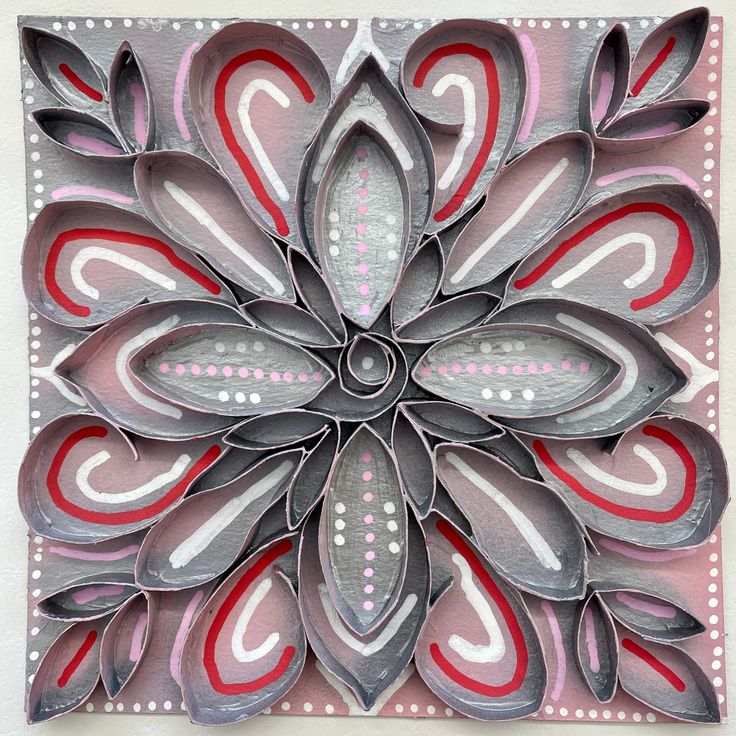
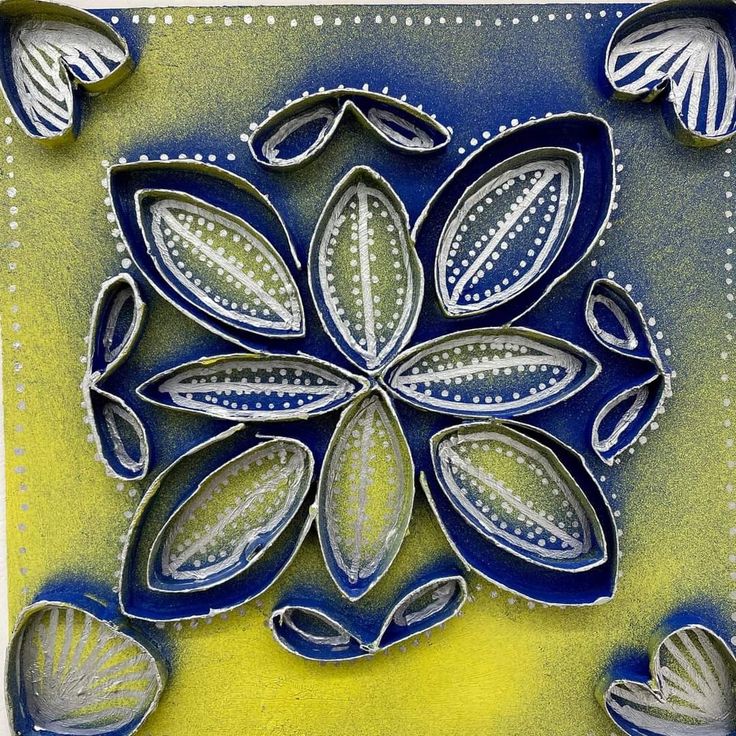
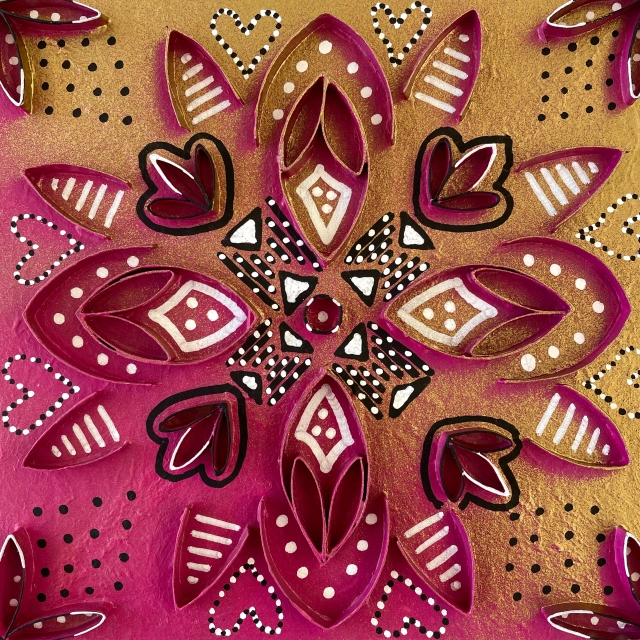
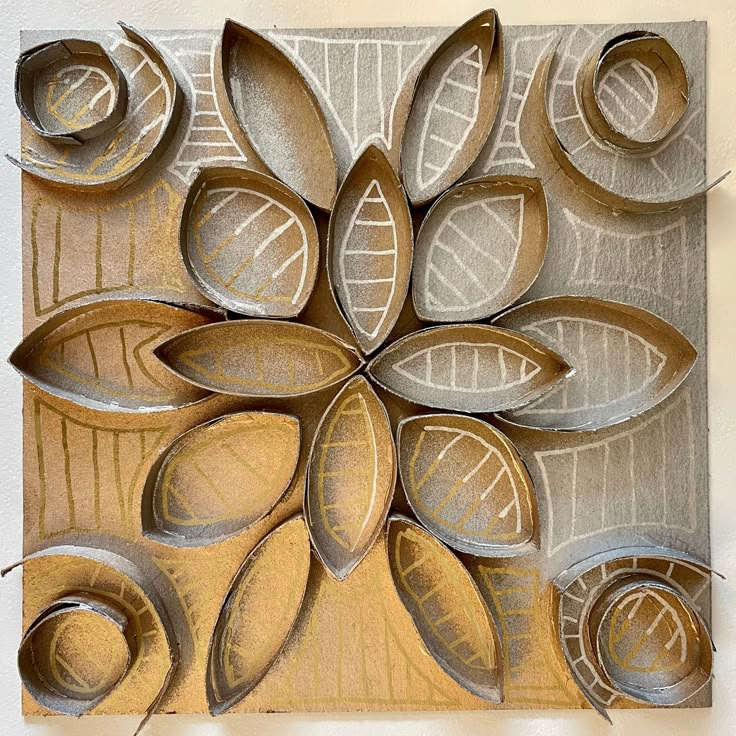
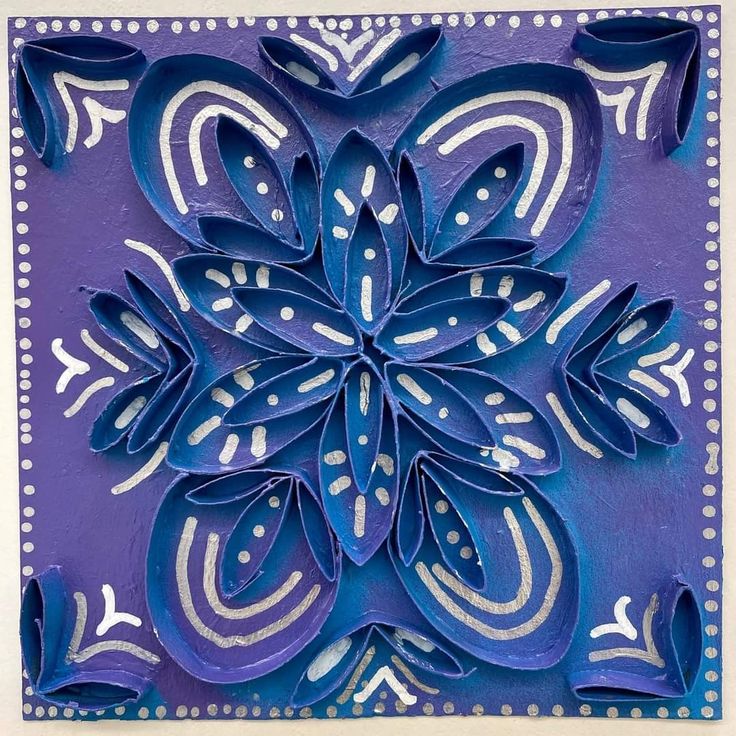
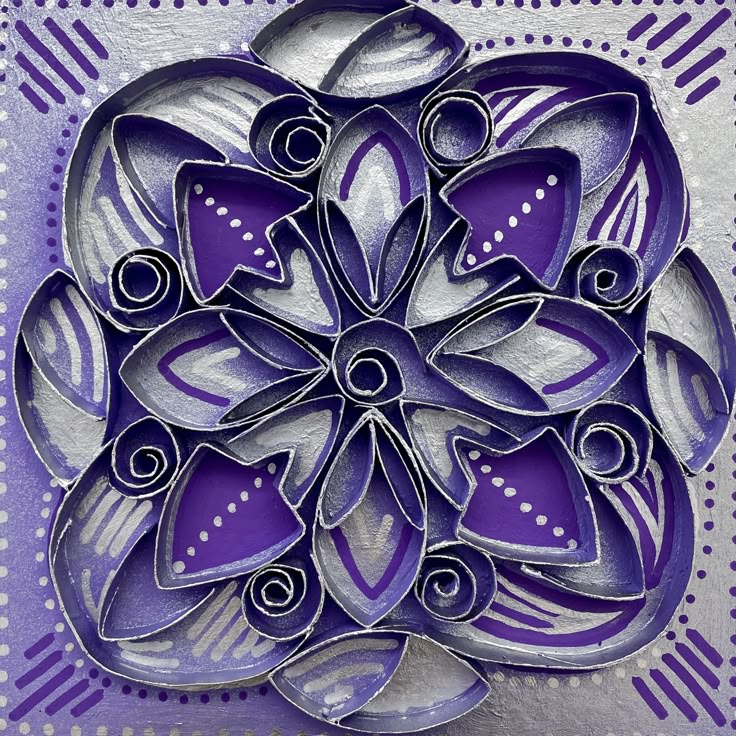
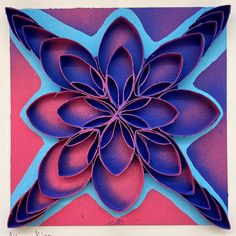
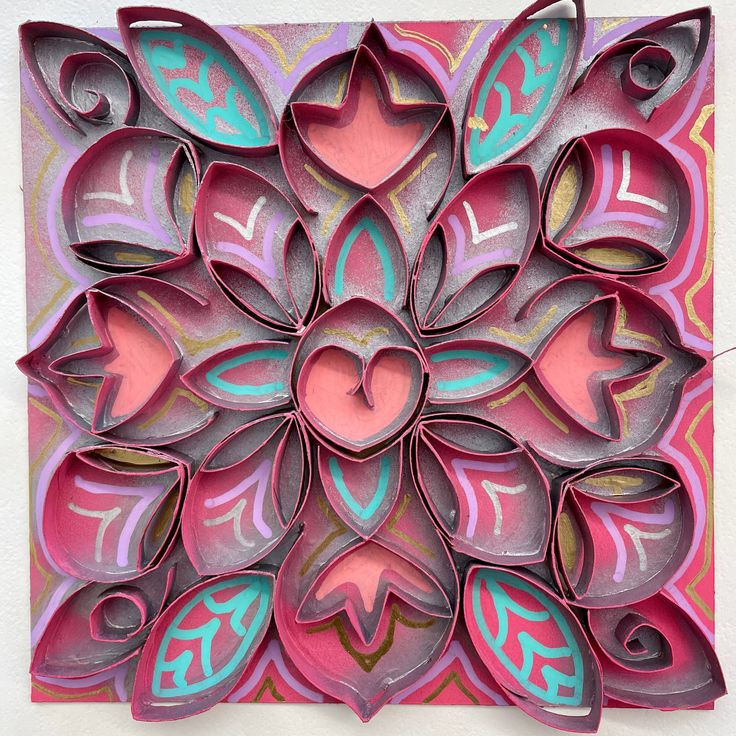
In this project, students will design and create a radial relief sculpture using cardboard as the primary material. By cutting, shaping, layering, and gluing cardboard pieces, students will build a raised (relief) composition that radiates outward from a central point. Once constructed, the sculpture will be enhanced with paint to emphasize depth, contrast, and visual movement.
The goal is to explore radial symmetry, texture, and dimensional design while transforming a simple material into a visually dynamic artwork. Students will focus on craftsmanship, creative problem-solving, and the intentional use of color to highlight form and structure.
Objectives
Students will:
* Apply principles of design (radial balance, repetition, rhythm, contrast, emphasis).
* Demonstrate understanding of radial symmetry through composition.
* Develop sculptural techniques using cardboard (cutting, bending, layering, shaping).
* Use adhesive methods effectively to construct stable, dimensional forms.
* Apply paint to enhance depth, highlight forms, and unify the design.
* Show craftsmanship, attention to detail, and thoughtful material use.
Materials
* Cardboard (various thicknesses)
* Scissors and/or craft knives (with supervision if required)
* Glue (hot glue, tacky glue, or white glue)
* Paint (acrylic or tempera)
* Paintbrushes (variety of sizes)
* Pencil for sketching
* Compass or circular objects (for planning radial layout)
* Protective covering for workspace
Process
1. Planning & Concept:
Decide on a central theme or idea (organic, geometric, abstract, nature-inspired). Plan how shapes will radiate from the center point.
2. Research & Inspiration:
Explore examples of radial designs (mandalas, flowers, sunbursts, etc.) and relief sculptures to understand structure and layering.
3. Sketching:
Create 2–3 thumbnail sketches showing radial symmetry. Identify the center and how elements will repeat or vary outward.
4. Cardboard Construction:
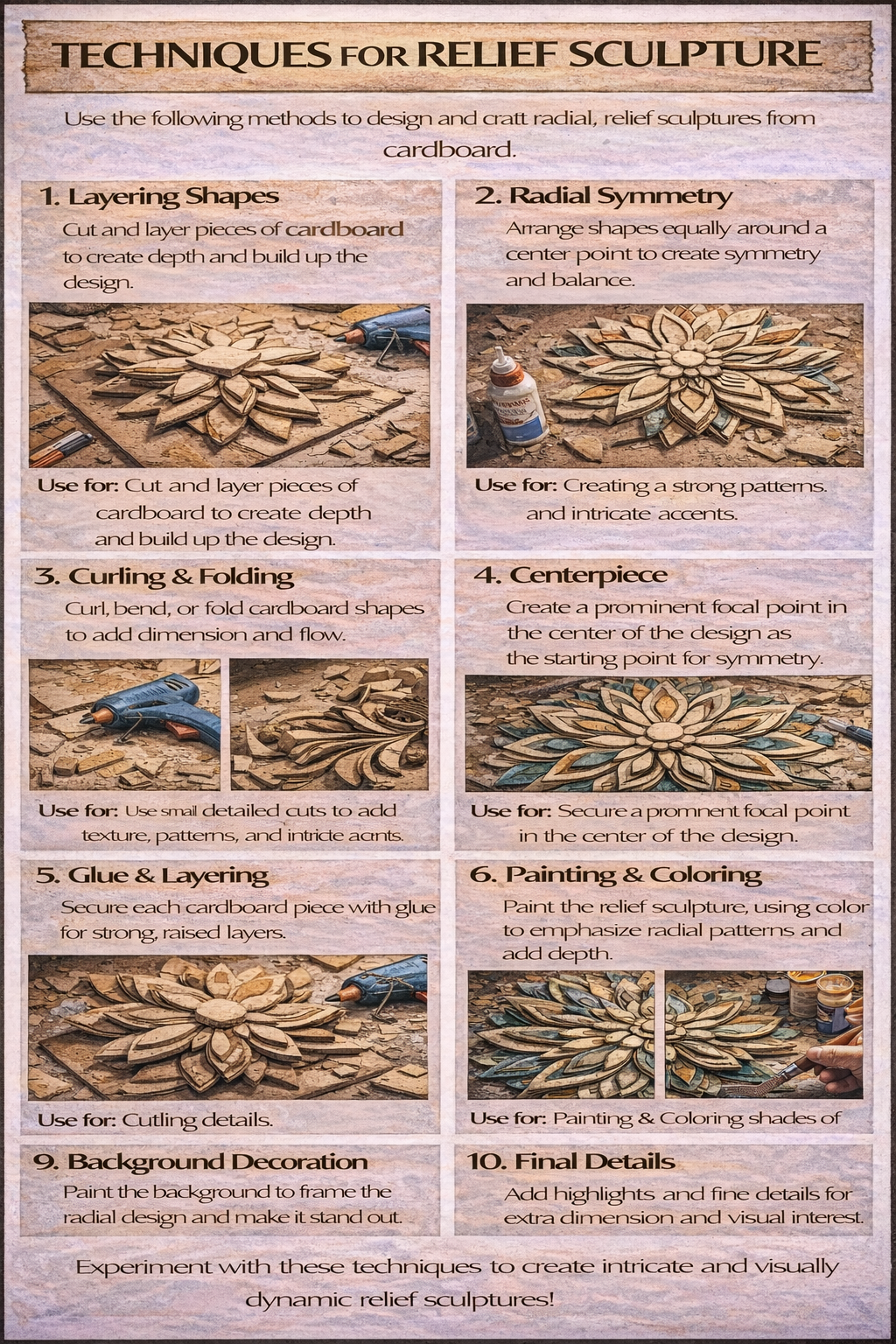
Cut cardboard into shapes. Bend, curl, or layer pieces to create dimension. Arrange and glue pieces starting from the center and working outward.
5. Assembly & Refinement:
Ensure all pieces are securely attached. Adjust composition for balance, spacing, and symmetry.
6. Painting:
Apply paint to enhance the design. Consider color schemes that emphasize depth (light vs. dark, warm vs. cool). Paint both inside and around shapes for contrast.
7. Final Touches & Presentation:
Clean up edges, reinforce weak areas, and ensure a polished final piece ready for display.
Assessment Criteria
* Clear demonstration of radial symmetry
* Strong use of balance, repetition, and visual movement
* Creativity and originality in design
* Craftsmanship and structural stability
* Effective use of paint to enhance form and depth
* Completion and overall presentation quality
Creative Challenge
Radial designs naturally guide the viewer’s eye from the center outward. Consider how your sculpture creates movement and energy. Will your design feel calm and balanced, or bold and dynamic? How can layering and color create depth and visual interest? Think about how simple cardboard can be transformed—can you twist, fold, or stack it in unexpected ways? How does your color choice enhance the three-dimensional effect? This project encourages students to combine sculpture, design principles, and creativity to transform everyday materials into expressive, dimensional works of art.
Learning Objectives / Student Targets
Learning Targets
By the end of this project, students will be able to:
1. Understanding of Radial Design
* Identify and apply radial symmetry in a composition.
* Create a design that clearly radiates from a central focal point.
* Demonstrate repetition and variation to build visual rhythm.
2. Material & Construction Skills
* Safely and effectively cut cardboard into a variety of shapes.
* Manipulate cardboard by bending, folding, and layering to create dimension.
* Use glue appropriately to construct a stable and secure relief sculpture.
3. Relief & Dimensional Form
* Build a low-relief sculpture that extends outward from a flat surface.
* Use layering techniques to create depth and overlapping forms.
* Demonstrate awareness of how light and shadow interact with raised surfaces.
4. Painting & Surface Treatment
* Apply paint to enhance the three-dimensional qualities of the sculpture.
* Use color intentionally to create contrast, unity, and emphasis.
* Paint both inside and around forms to define edges and spaces.
5. Composition & Design Principles
* Organize elements to achieve balance, harmony, and visual movement.
* Use repetition, contrast, and emphasis to guide the viewer’s eye.
* Maintain consistency and clarity in the overall radial structure.
6. Creative & Critical Thinking
* Experiment with ways to transform flat cardboard into dynamic forms.
* Make intentional artistic decisions about shape, arrangement, and color.
* Solve construction challenges and adapt ideas during the process.
7. Reflection & Artistic Growth
* Evaluate the effectiveness of symmetry, craftsmanship, and design choices.
* Reflect on challenges and successes in working with sculptural materials.
* Demonstrate growth in confidence with three-dimensional art-making.
Ohio Fine Arts Standards (Visual Arts)
Creating (Cr)
* Generate and conceptualize artistic ideas based on observation, imagination, and personal experience.
* Organize and develop artistic ideas using elements and principles of design (such as balance, repetition, and symmetry).
* Apply creative thinking to design a composition that demonstrates radial symmetry.
* Experiment with materials (cardboard, paint, glue) to explore new ways of creating form and texture.
Producing / Performing (Pr)
* Demonstrate skill and craftsmanship in the use of art materials and tools.
* Manipulate materials to create both two-dimensional and three-dimensional forms.
* Apply techniques such as cutting, bending, layering, and assembling to construct a relief sculpture.
* Use elements and principles of design to create a visually effective composition.
* Solve visual and structural problems during the artmaking process.
Responding (Re)
* Analyze how elements and principles of design (contrast, balance, rhythm) are used in artworks.
* Interpret how artistic choices (form, color, texture) communicate meaning.
* Reflect on personal artwork and identify strengths and areas for improvement.
* Use appropriate art vocabulary to describe processes and outcomes.
Connecting (Co)
* Relate artistic ideas and work to personal experiences and the environment.
* Identify how art connects to real-world structures, patterns, and natural forms (e.g., radial designs in nature like flowers or mandalas).
* Understand the role of art in different cultures and contexts.
* Make connections between visual art and other disciplines (math concepts like symmetry, science concepts like structure and form).
Enduring Understandings (Ohio Visual Art Framework)
* Personal Choice and Vision: Students express ideas through original design and creative decisions.
* Critical and Creative Thinking: Students solve problems and refine ideas during construction.
* Authentic Application: Students apply art-making skills to create meaningful, physical works.
* Literacy in the Arts: Students interpret and communicate meaning through visual elements and reflection.
Summary for Your Lesson Plan
This radial relief sculpture project aligns strongly with Ohio’s standards by requiring students to:
* Create original designs using symmetry
* Produce a three-dimensional artwork using materials and techniques
* Respond through reflection and critique
* Connect their work to broader artistic and real-world ideas
Grading Rubric
Rubrics have become popular with teachers as a means of communicating expectations for an assignment, providing focused feedback on works in progress, and grading final products. A rubric is a document that articulates the expectations for an assignment by listing the criteria, or what counts, and describing levels of quality from excellent to poor.


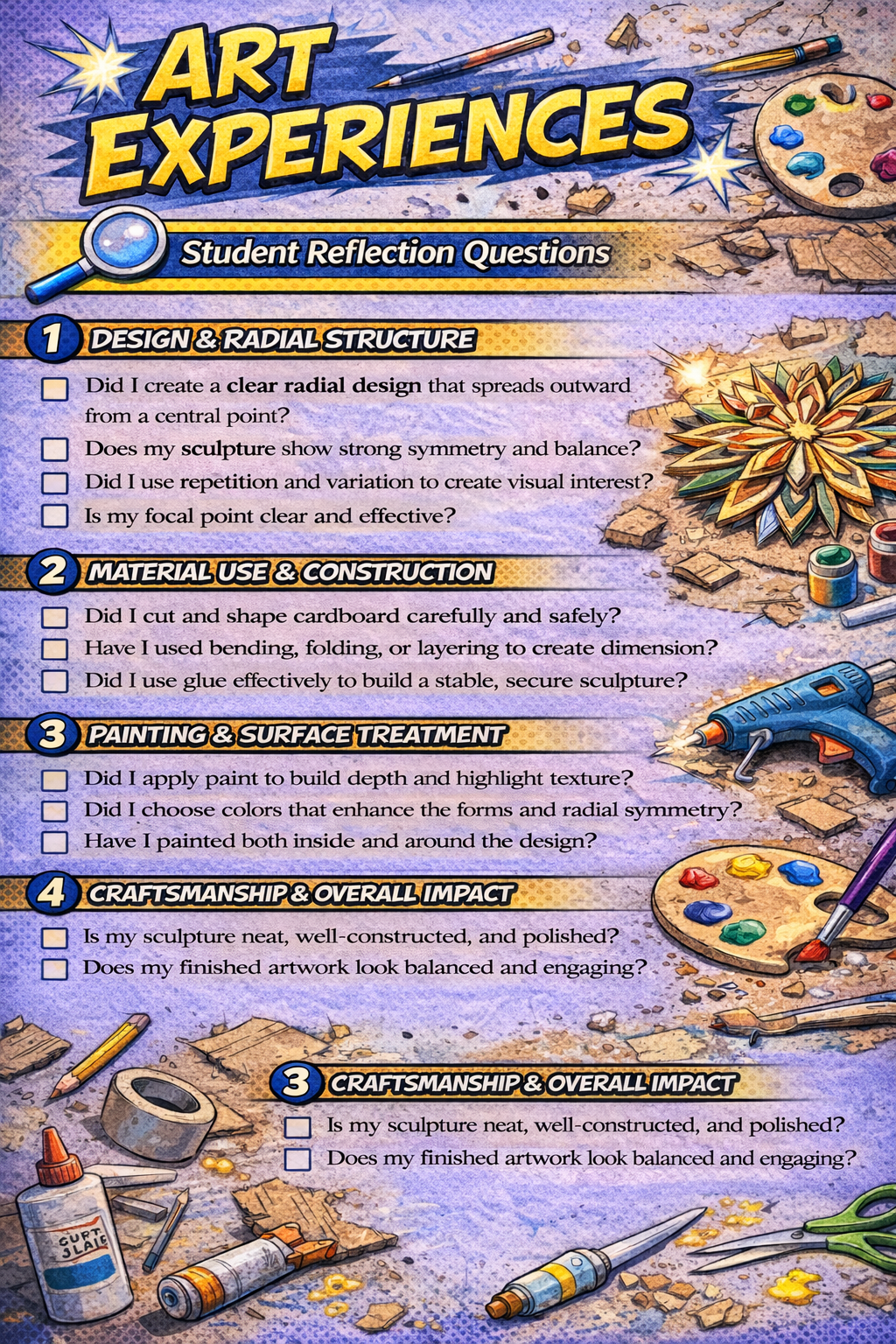
Student Reflection
A student reflection is a brief, thoughtful explanation of how and why a student created their artwork, including the choices they made, challenges they faced, and what they learned during the process. In art, reflection is important because it helps students develop critical thinking, recognize growth, strengthen their creative decision-making, and take ownership of their artistic development.
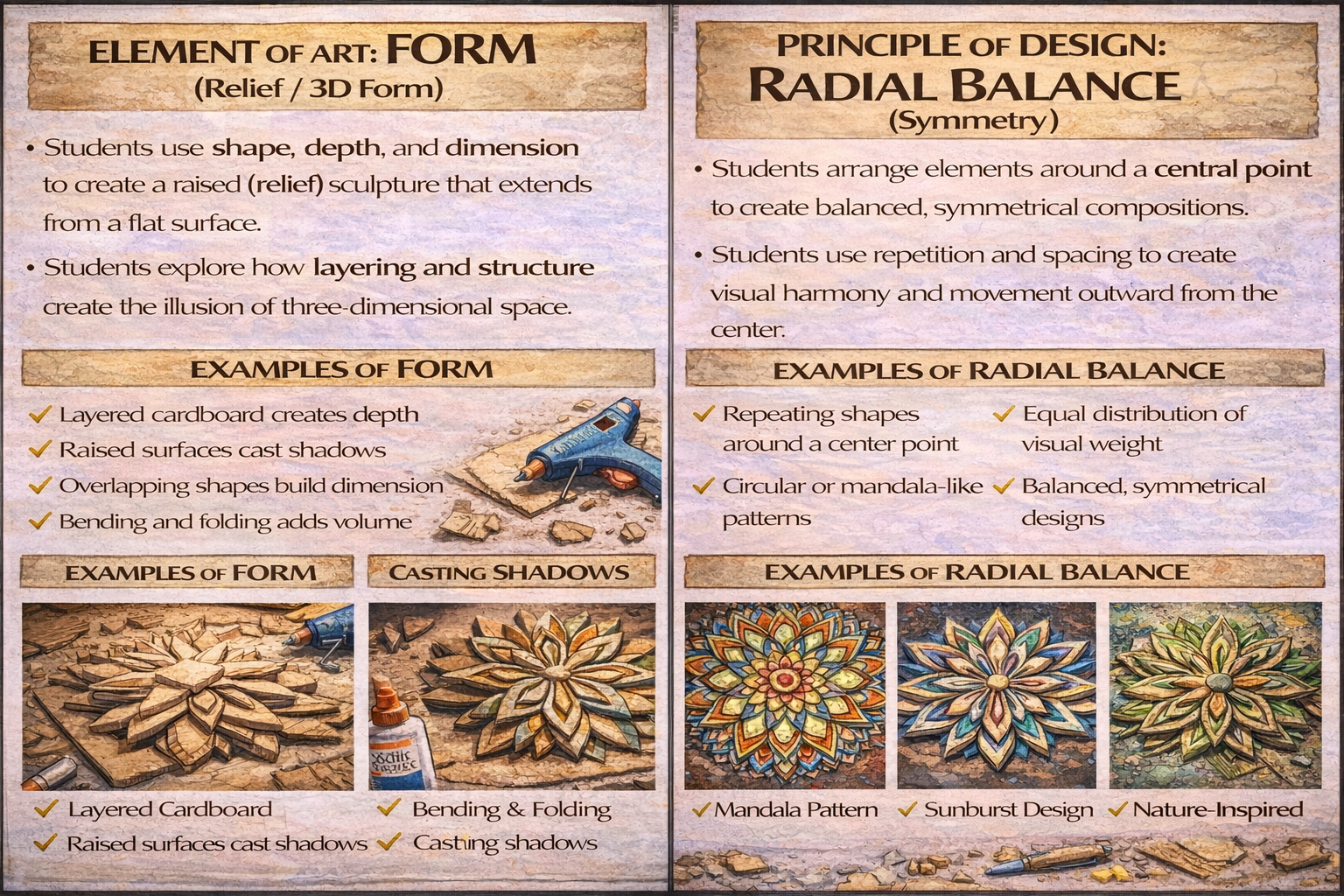
Element of Art & Principle of Design
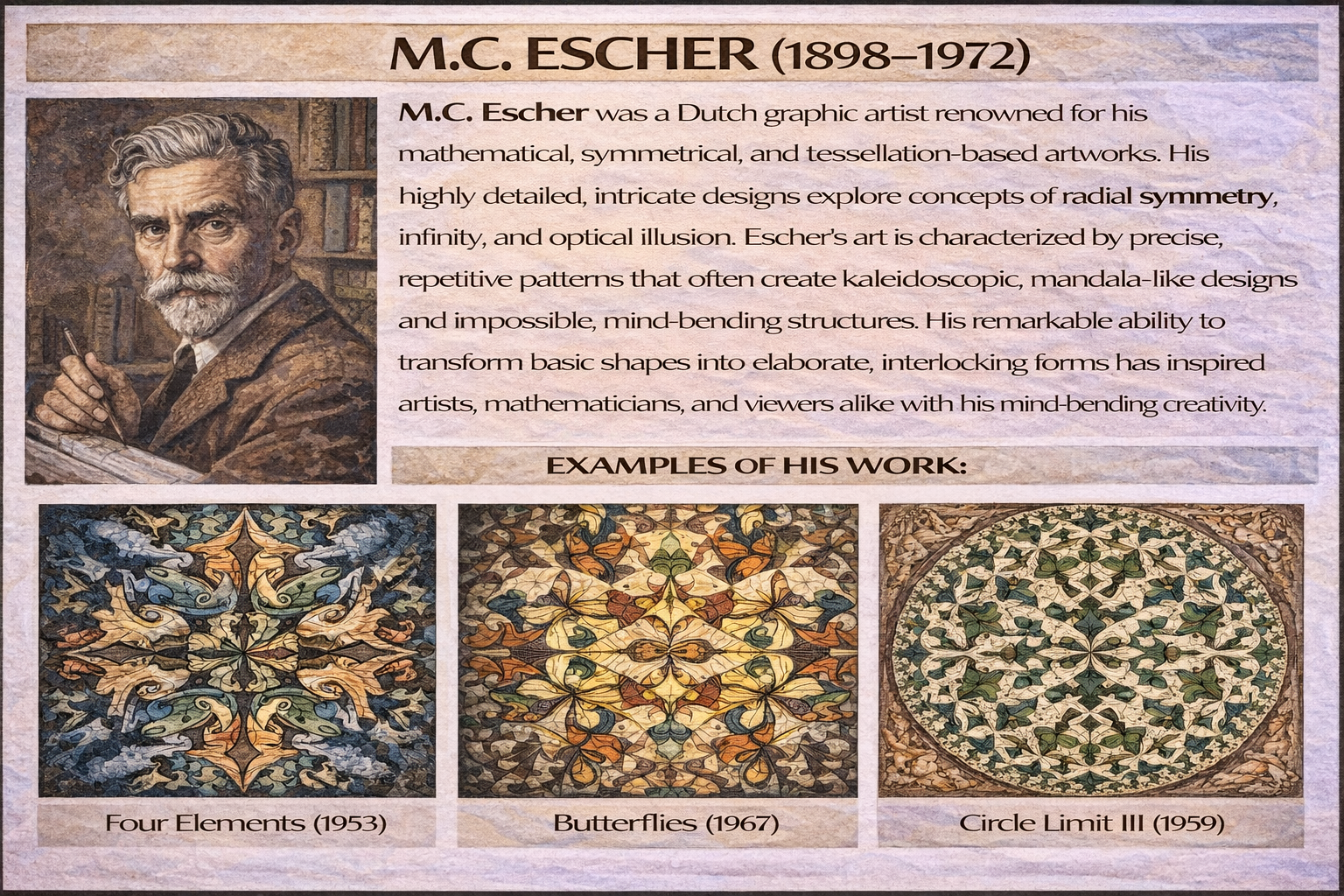
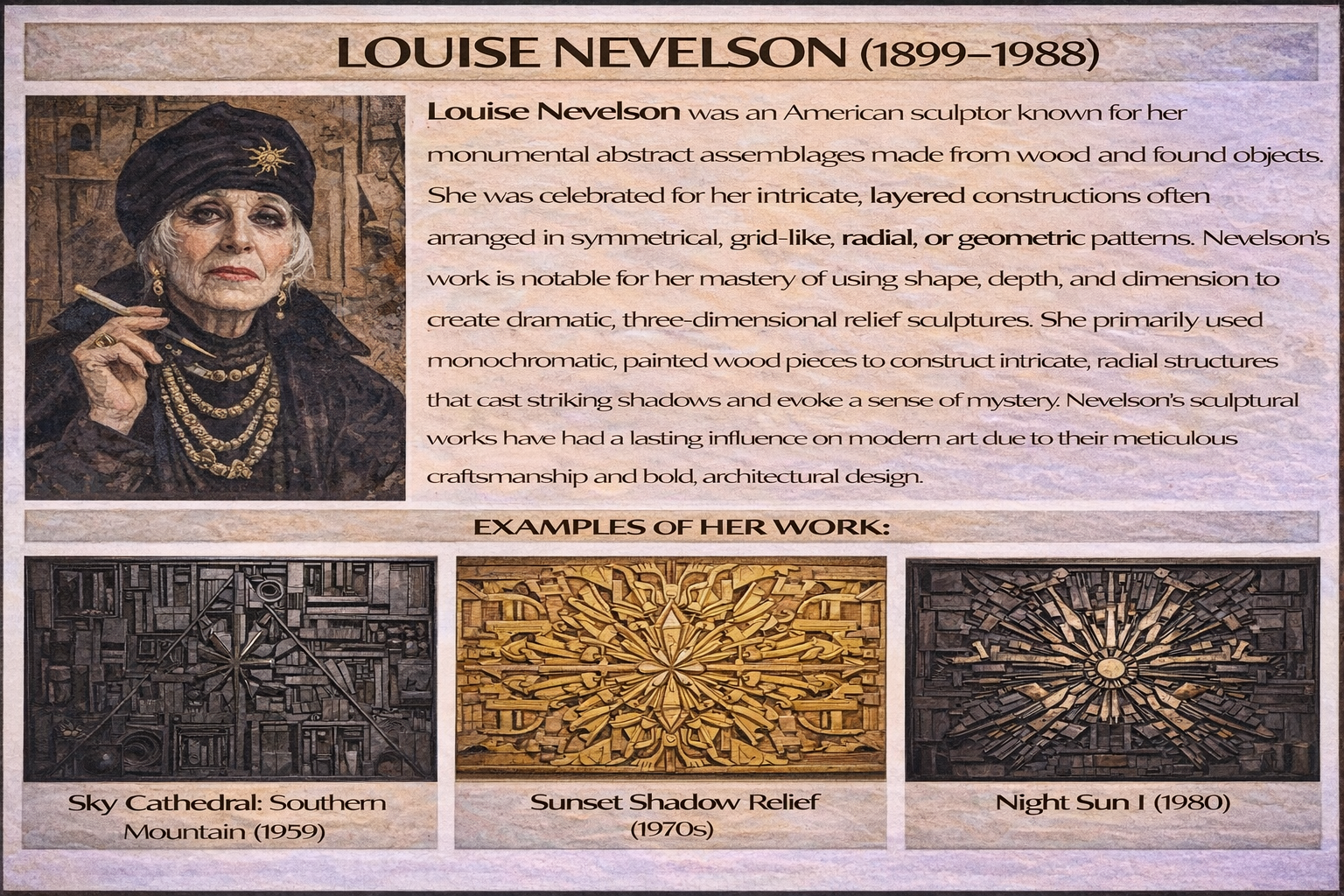
Geometric Designers
Techniques
Project Demonstrations
Examples
“Creativity takes courage.”

Cloverleaf High School
Follow Us